
Why Air Conditioners Fail in Late Summer — and Whether to Repair Now or Replace This Fall
· 7 min read · Right Away Plumbing and HVAC
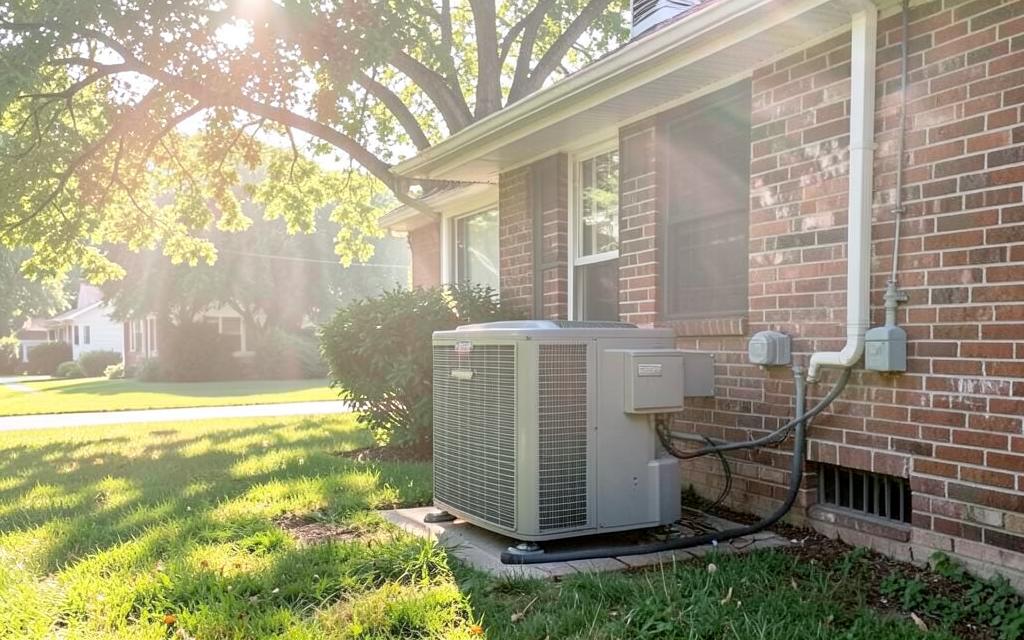
There is a reason AC service calls spike in August and early September. A central air conditioner does not usually fail on the first hot day of the year — it fails after months of work, on a humid late-summer afternoon, when every weakness the system has been carrying since June finally catches up with it.
If your system has been running all season, this is the point where paying attention pays off. Below is why late summer is the danger zone, the warning signs of a system under strain, what to check yourself before calling, and how to think honestly about a repair now versus a planned replacement this fall.
Why late summer is when systems give out
By August, a Chicagoland air conditioner has logged hundreds of run hours through heat and humidity. Three things tend to reach their limit at the same time.
Capacitors — the components that give the compressor and fan motors the jolt they need to start — degrade with heat and cycles. A capacitor that survived July may measure weak enough by late August that one more hard start finishes it. Capacitor failure is the single most common reason a condenser suddenly will not run, and it is a late-season failure by nature.
Coils are the second factor. A condenser coil that has spent all season pulling in cottonwood seeds, grass clippings and dust transfers heat worse every week. The system compensates by running longer at higher pressure, which stresses the compressor exactly when outdoor temperatures are still high.
And a refrigerant charge that has been marginally low since spring — enough to cool on mild days — finally shows itself as warm air and ice on the line when the system can no longer coast.
Warning signs of a system under strain
Most late-summer failures announce themselves a week or two ahead of time. Ice on the line deserves special emphasis: it looks like the system is cooling too well, but it actually means airflow or refrigerant charge is off, and running it frozen can damage the compressor. If you see ice, shut the cooling off, let it thaw with the fan running, and treat it as a service call rather than a quirk. Otherwise, watch for:
- Run times getting noticeably longer for the same thermostat setting
- Air from the vents that is cool-ish rather than properly cold
- Weak airflow in some rooms, or warm spots that were fine in June
- Ice on the refrigerant line at the outdoor unit or the indoor coil
- The outdoor unit humming but the fan not spinning, or short cycling on and off
- Electric bills climbing with no change in how you set the thermostat
- New sounds — buzzing at startup, clicking, or a fan that sounds rough
- The system struggling specifically on the hottest, most humid afternoons
What to check before you call
A few checks take ten minutes and occasionally save a service visit — and when they do not, they give the technician useful information. One caution on the breaker before you start: a breaker that trips once after a storm may be nothing, but a breaker that trips twice is telling you a motor or compressor is drawing too much current, and resetting it repeatedly can turn a repairable part into a failed compressor.
- The filter — a filter that has been in since May can be choking airflow by late summer; replace it first
- The thermostat — confirm it is set to cool, and replace the batteries if it has them
- The breaker — a tripped breaker can follow a storm or a hard start; reset it once, and if it trips again, stop and call
- The outdoor unit — clear leaves, grass clippings and anything stored against it; the condenser needs open space on all sides to reject heat
- The condensate drain — water near the furnace or a float switch that has shut the system down usually means a clogged drain line
- Supply vents — confirm they are open and not blocked by furniture that shifted over the summer
Repair now, or wait for a fall replacement?
This is the honest version of the conversation we have in basements every September. Repair usually makes sense when the system is under ten years old, has been reliable, and the fault is a normal wear part — a capacitor, contactor, fan motor or clogged drain. Those repairs are straightforward, and a sound system fixed in September will give you years more service.
Replacement deserves a serious look when the system is 12 to 15 years old or more, when the failing part is the compressor or a coil, when it runs on R-22 refrigerant, or when this is the second or third repair call of the season. In those cases, a late-season repair is often money spent to keep a declining system limping to a finish line that keeps moving.
The practical advantage of a fall replacement is that you stop making the decision under pressure. A failed system in a heat wave is a same-day decision; a planned October installation lets you compare efficiency levels and equipment properly. If the system is old and the repair is significant, pricing the repair and a replacement side by side is the right way to decide — we quote both so the numbers, not the weather, make the call.
For how we diagnose and service systems like this, see our air conditioning repair and cooling services page.
If your system is blowing warm air, freezing up or has shut down, our AC repair page covers symptoms, diagnosis and the most common fixes.
Thinking about a replacement before next cooling season, or want a second opinion on a quote you already have? Right Away offers heating and cooling system consulting to help you plan equipment, efficiency and timing rather than decide in an emergency.
Frequently asked questions
Why did my AC work fine in June but struggle now?
Because wear is cumulative. Capacitors weaken with heat and cycles, coils foul with a season of dust and cottonwood, and a marginal refrigerant charge stops being enough once the system has no reserve left. Late summer is simply when a system carrying small problems runs out of margin.
Is ice on the refrigerant line a serious problem?
It needs attention, yes. Ice means low airflow or low refrigerant charge, and continuing to run the system frozen can damage the compressor — the most expensive part in it. Shut the cooling off, let it thaw completely with the fan running, check the filter, and have the system checked before running it hard again.
Is it worth repairing an AC this late in the season?
Often, yes. A capacitor, contactor or fan motor on a system under ten years old is a sensible repair at any point in the calendar. The calculation changes when the system is 12 to 15-plus years old, the failing part is a compressor or coil, or you have already paid for repairs this season — then pricing a fall replacement alongside the repair is the smarter comparison.
My AC runs constantly but the house stays humid. Is that strain?
It can be. Long run times with clammy air point to a system that is oversized, low on charge, or fighting dirty coils and restricted airflow. It is worth a service visit now rather than waiting for the component that fails next.
Should I just turn the AC off and wait for fall?
If the system is showing strain but still cooling, there is no need to shut it down — just avoid ignoring the signs. If it is blowing warm air, freezing up, or tripping the breaker, turn it off to prevent further damage and have it diagnosed. Even a short heat stretch can be hard on a struggling compressor.
Talk to Right Away
If your air conditioner has been running longer, cooling less, or making new sounds as the season winds down, have it looked at before it picks the hottest afternoon left to quit. Right Away Plumbing and HVAC diagnoses and repairs cooling systems across Des Plaines and Chicagoland, and when it makes sense we will quote the repair and a replacement side by side.
Reach the suburbs at 847-550-3322 and Chicago neighborhoods at 773-250-6060.
You can read more about our plumbing services, check the communities we serve, or start with plumbing in Des Plaines and Park Ridge. Planning a remodel or weighing a big replacement? Our consulting service is built for that conversation.