Furnace Smells Like Burning When First Turned On: What Chicago Homeowners Should Know
· 10 min read · Right Away Plumbing and HVAC
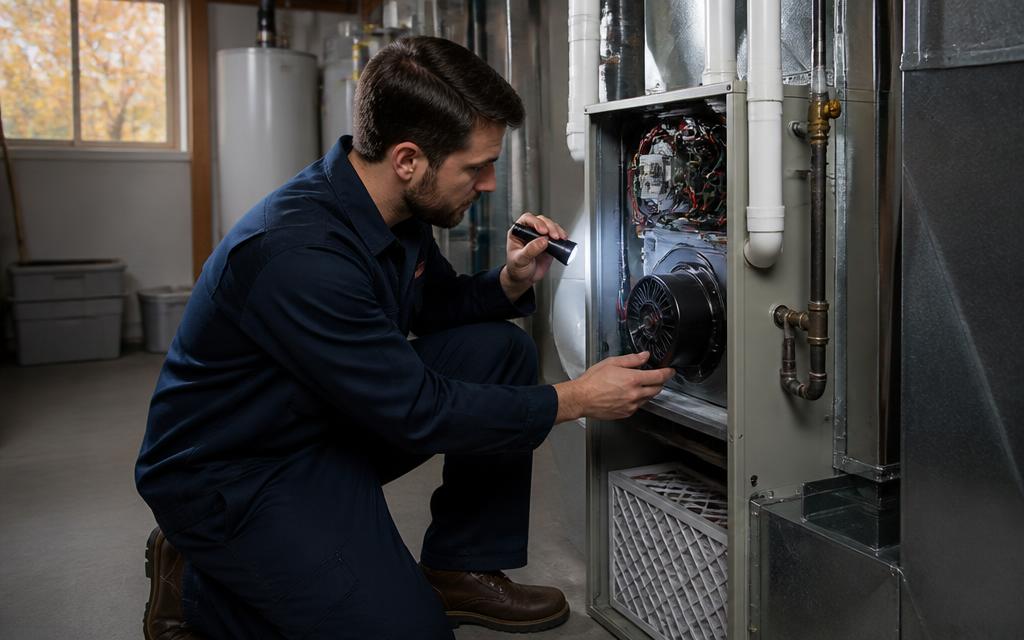
Turning on the furnace for the first time in fall can produce an unfamiliar odor. Sometimes it is ordinary dust burning off after the equipment has been idle. Other odors can indicate overheating electrical components, restricted airflow, an ignition problem or unsafe combustion.
The important distinction is whether the odor is mild and temporary or strong, persistent and accompanied by smoke, soot, unusual sounds or a carbon-monoxide alarm.
Right Away Plumbing and HVAC diagnoses furnace odors, overheating, ignition problems and other heating failures throughout Chicago, Des Plaines and the surrounding suburbs.
Is a dusty furnace smell normal during the first fall startup?
A light dusty odor can occur during the first few heating cycles of the season. Dust may settle on the heat exchanger, burners and other warm surfaces while the furnace is unused.
This odor should normally be mild, begin improving quickly and disappear after the furnace operates for a short period. It should not produce visible smoke, melted-plastic odors, soot or repeated safety shutdowns.
If the odor remains after several normal cycles, becomes stronger or returns every time the furnace starts, the system should be inspected.
For the broader diagnosis beyond this symptom, see what can cause a furnace to stop working; the visible FAQ separates safe observations from technician-only checks.
City homes can review residential furnace repair in Chicago.
If you live inside Chicago city limits, our Chicago furnace repair page covers city homes and the 773 line.
A seasonal startup check is part of our heating system inspections, and ongoing odors belong with
Burning-dust odor versus an electrical-burning smell
A dusty odor usually smells dry and musty. An electrical problem may smell like hot wiring, melting plastic, overheated insulation or scorched electronics.
- An overheating blower motor
- A failing motor capacitor
- Loose or damaged wiring
- An overloaded control component
- A problem inside the furnace control board
- Restricted airflow causing excessive temperatures
- Foreign material contacting a hot component
What to do about an electrical odor
Turn the furnace off if you smell melting plastic or hot electrical insulation. Do not repeatedly restart it or reset a breaker that trips again.
A technician should inspect the wiring, blower assembly, electrical connections and operating amperage before the system is returned to service.
Can a dirty filter cause a burning smell?
A severely restricted filter can reduce airflow through the furnace. Insufficient airflow may cause the heat exchanger and furnace cabinet to operate at higher temperatures and can trigger the high-limit safety control.
You may notice:
- A hot or burning odor
- Weak airflow from the registers
- The burners shutting off while the blower continues running
- Short heating cycles
- The furnace starting and stopping repeatedly
- Rooms that do not reach the thermostat setting
What you can safely check
You can inspect an accessible disposable filter and replace it with the correct size and type if it is visibly dirty. Do not operate the furnace without its filter, bypass a limit switch or assume that replacing the filter corrected any heat damage that already occurred.
Persistent overheating requires professional diagnosis.
What does a smoky or fuel-burning odor mean?
A smoky, exhaust-like or unusual fuel odor should not be treated as normal seasonal dust.
Possible causes include improper combustion, burner contamination, ignition trouble, venting problems or an obstruction in the combustion-air or exhaust system. Soot near the equipment or venting is another warning sign.
Carbon monoxide itself has no smell. Therefore, the absence of an odor does not prove that fuel-burning equipment is safe.
The U.S. Consumer Product Safety Commission identifies an unfamiliar burning odor, soot and a furnace that cannot heat properly as possible signs of appliance trouble. It recommends annual inspection of heating systems, chimneys and vents by trained technicians.
You can read the commission's guidance in its carbon monoxide safety publication.
When should you turn the furnace off immediately?
Turn the furnace off and request qualified service if you notice:
- Visible smoke
- A melting-plastic or electrical-burning odor
- Soot or scorching around the furnace
- A gas or fuel odor
- A breaker that trips again
- Buzzing, arcing or crackling sounds
- A carbon-monoxide alarm
- Headache, dizziness, nausea or unusual fatigue inside the building
- A furnace that repeatedly overheats or enters a safety lockout
If you smell gas or an alarm sounds
If you smell gas, leave the building without operating switches or creating a spark. Contact the gas utility or emergency services from a safe location.
If a carbon-monoxide alarm sounds or occupants experience possible exposure symptoms, everyone should get outside and follow emergency instructions. Do not operate the furnace again until the cause has been evaluated.
Why does the odor return every time the furnace starts?
A normal dust odor should improve rather than return throughout the heating season. A recurring odor may indicate:
- Continued overheating
- A dirty burner assembly
- Blower-motor trouble
- Damaged wiring or insulation
- Objects or debris near hot furnace surfaces
- A venting or combustion problem
- Oil, chemicals or stored materials near the furnace
- Air being pulled into the return system from an unsuitable area
How the source is located
The source should be located before replacing random parts. Furnace diagnosis may include checking temperature rise, filter and airflow conditions, blower operation, electrical connections, burner performance, ignition sequence, venting and safety-control operation.
If the furnace short-cycles or never receives a proper heat call, see our thermostat and heating-control repair information.
What if the furnace smells but is still heating?
Producing heat does not automatically mean the furnace is operating correctly. A furnace may continue heating while a motor overheats, airflow remains restricted or combustion deteriorates.
Useful details to give the technician include:
- When the odor begins
- How long it lasts
- Whether it occurs during ignition or blower operation
- Whether airflow is strong or weak
- Whether the furnace short-cycles
- Whether smoke, soot or unusual sounds are present
- Any diagnostic light or fault code
- Whether a breaker or safety control has tripped
One thing to avoid
Do not open a gas or energized electrical compartment to investigate.
Should the furnace be repaired or replaced?
A burning odor alone does not determine whether the furnace needs replacement. Many problems involve repairable filters, wiring connections, blower components, burners or controls.
Replacement may deserve consideration when the furnace has a damaged heat exchanger, extensive electrical damage, repeated major failures or a repair cost that is difficult to justify based on the equipment's age and overall condition.
Right Away can inspect the system and explain the available repair and replacement options without assuming that every odor requires new equipment.
If replacement does make sense, our furnace installation page explains sizing, venting and the equipment options we install.
Furnace service in Chicago and the surrounding suburbs
Right Away Plumbing and HVAC provides furnace, thermostat, boiler, heat-pump and heating-control service for homes and businesses across Chicago and the surrounding suburbs.
For a Chicago property, call 773-250-6060. For Des Plaines and the surrounding suburbs, call 847-550-3322.
Our office is located at 2093 Rand Rd, Des Plaines, IL 60016. Right Away is licensed, bonded and insured.
See everything we handle on our heating services page, review
Des Plaines, browse all
service areas, or use the
contact page to request furnace diagnosis.
Frequently asked questions
How long should the first furnace smell last?
A mild dusty odor should begin improving quickly during the first normal heating cycle. If it remains strong, continues through multiple cycles or returns whenever the furnace starts, have the system inspected.
Why does my furnace smell like melting plastic?
The furnace could have overheating wiring, electrical insulation, a motor, capacitor or control component. Turn it off and request service. Do not repeatedly reset a tripped breaker.
Can a clogged filter make a furnace smell hot?
Yes. A heavily restricted filter can reduce airflow and contribute to overheating or limit-switch shutdowns. Replace a visibly dirty filter with the correct type, but arrange diagnosis if the odor or overheating continues.
Is a burning smell a sign of carbon monoxide?
Carbon monoxide has no odor. However, an unusual burning odor, soot or improper furnace operation can indicate an equipment problem that should be evaluated. Leave immediately if a carbon-monoxide alarm sounds.
Should I run the furnace to burn away the smell?
Only a mild, temporary dusty odor without smoke, soot, gas odor, electrical odor or other warning signs may be monitored briefly. Turn the furnace off if the smell is strong, persistent or resembles melting plastic, smoke, fuel or exhaust.
Does Right Away inspect furnace odors in Chicago?
Yes. Right Away diagnoses furnace odors, ignition failures, overheating, airflow problems and heating-control faults. Chicago customers call 773-250-6060; suburban customers call 847-550-3322.
Talk to Right Away
If the furnace produces more than a brief dusty odor, do not wait for a complete no-heat failure. Right Away Plumbing and HVAC can inspect the furnace, trace the source of the smell and explain the appropriate repair options.
Call 773-250-6060 for Chicago or 847-550-3322 for Des Plaines and the surrounding suburbs, or request service online.
You can read more about our plumbing services, check the communities we serve, or start with plumbing in Des Plaines and Park Ridge. Planning a remodel or weighing a big replacement? Our consulting service is built for that conversation.
Service areas for this work include Chicago and Des Plaines. Questions about your building? Use our contact page.