Signs Your Furnace Needs Repair vs. Replacement
· 8 min read · Right Away Plumbing and HVAC
Most furnaces do not quit without warning. They get louder, run shorter or longer than they should, heat some rooms well and others poorly, and quietly push the gas bill up a little more each winter. The hard part for a homeowner is knowing which of those signs calls for a repair visit and which ones mean you are maintaining a furnace that is nearing the end of its useful life.
With fall arriving in Chicagoland, this is the right moment to sort that out — before the first hard freeze turns a borderline furnace into an urgent one. Below are the warning signs we look for, the repair-versus-replacement math we walk customers through, and the one symptom that is never a wait-and-see.
Warning signs a furnace needs attention
A healthy gas furnace starts quietly, runs a steady cycle, and shuts off without drama. Changes from that pattern are information. These are the signs that most often precede a breakdown or a bigger bill.
Any single sign below can be minor — a filter, a flame sensor, a loose belt. Two or three of them together, especially on an older unit, are usually a pattern rather than a coincidence, and they are worth having diagnosed before heating season is in full swing.
- New or louder noises — banging at startup, squealing from the blower, rattling panels, or a rumble after the burners shut off
- Short cycling — the furnace starts, runs a few minutes, shuts off, and starts again without reaching the set temperature
- Uneven heating — some rooms comfortable, others stubbornly cold, or the thermostat says 70 and the house disagrees
- Rising gas or electric bills with no change in weather or thermostat habits
- The blower running constantly, or weak airflow from the registers
- More dust, dryness or a burning smell that does not clear after the first few runs of the season
- Frequent resets — you are restarting the furnace or flipping the breaker more than once
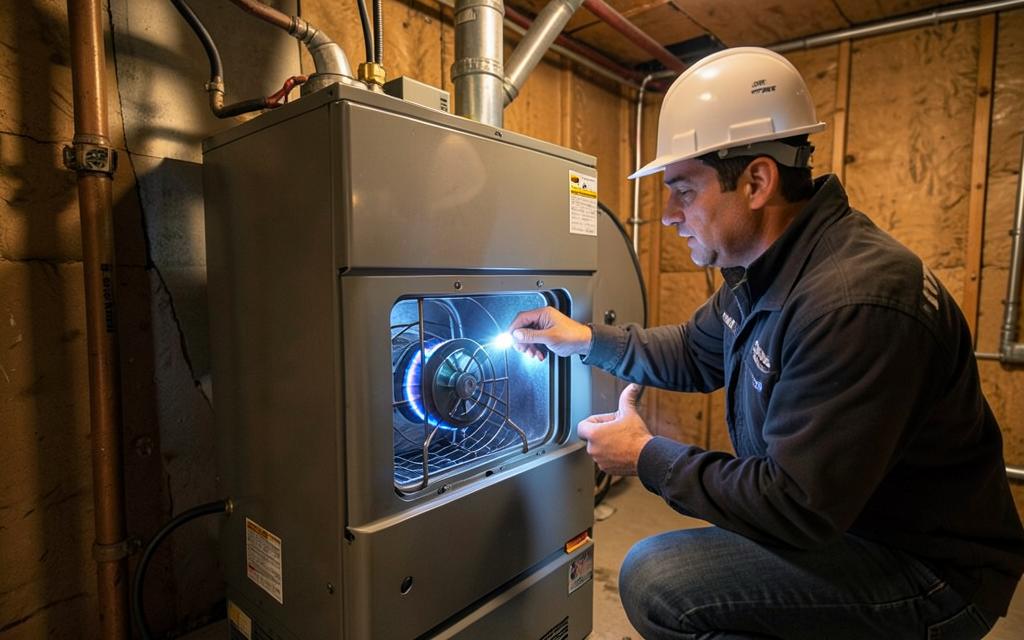
- A yellow or flickering burner flame instead of a steady blue one (see the safety note below)
For the broader diagnosis beyond this symptom, see what can cause a furnace to stop working; the visible FAQ separates safe observations from technician-only checks.
City homes can review residential furnace repair in Chicago.
The carbon monoxide rule: one symptom you never wait on
Most furnace symptoms are about comfort and money. One is about safety. A gas furnace burns fuel, and a furnace with a cracked heat exchanger, a blocked flue, or a venting problem can release carbon monoxide into the home. CO is colorless and odorless, which is exactly why it is dangerous.
Treat these as stop-and-call-now signals, not maintenance items: a yellow, orange or flickering burner flame instead of a steady blue; soot or scorch marks around the furnace; a metallic or exhaust smell while the furnace runs; unexplained headaches, dizziness or nausea that ease when you leave the house; or a carbon monoxide detector that alarms or shows elevated readings.
If your CO detector goes off, get everyone outside, call your utility or 911, and do not run the furnace until it has been inspected. Every home with gas heat should have working CO detectors on each level — they are inexpensive and they are the backup for everything else in this article.
When a repair is the right call
Most furnace service calls end in a repair, and most of the time that is the correct outcome. Repair generally makes sense when the furnace is under about 12 to 15 years old, has been reliable, and the fault is a normal wear item rather than a structural one.
The common thread: the furnace around the failed part is still sound. Fixing a 9-year-old furnace with a bad ignitor is an easy decision — that part was always going to wear out, and the furnace has years of service left in it.
- Ignitor or flame sensor failure — common, inexpensive, and expected over a furnace's life
- Blower motor capacitor, belts or bearings on a mid-life furnace
- Thermostat or control board issues on an otherwise healthy unit
- A dirty burner assembly or restricted filter causing short cycling
- Condensate drain clogs on high-efficiency furnaces with PVC venting
When replacement is the smarter money
Two numbers drive this decision more than any other: age and repair cost. A gas furnace in our climate typically lasts 15 to 20 years with regular maintenance — Chicagoland's long heating season means furnaces here accumulate run-hours faster than the national average. Past about 15 years, every repair has to be weighed against how much furnace is left.
The efficiency gap matters in the math. Replacing an older 70%-efficiency furnace with a modern high-efficiency condensing unit means meaningfully less gas burned for the same heat, and in qualifying situations that difference shows up on every winter bill. Actual savings depend on your existing equipment, the home, installation quality and usage, so we quote the repair and a matched replacement side by side and let you compare real numbers.
- The furnace is 15 years old or more and needs anything beyond a minor repair
- The repair quote approaches roughly half the cost of a new furnace installed — the classic 50% rule
- The heat exchanger is cracked — this is both a safety issue and usually the most expensive repair a furnace can need
- Heating bills have climbed steadily even with normal use, as older furnaces commonly run at 70–80% efficiency while new standard models start around 80% and high-efficiency condensing furnaces reach 90% and above
- You are on a second or third repair within the same heating season
- The furnace was oversized or undersized for the house from day one, which no repair will fix
Repair vs. replacement at a glance
When we evaluate a furnace, this is roughly the checklist we run through with the homeowner.
Lean toward repair when
- The furnace is under 12–15 years old
- The problem is a single wear part: ignitor, sensor, capacitor, belt, thermostat
- The unit has been reliable and heating bills have been stable
- The heat exchanger is intact and the flame burns blue
Lean toward replacement when
- The furnace is 15–20+ years old
- A repair quote approaches half the price of a new furnace
- The heat exchanger is cracked or the furnace has failed a combustion safety check
- Bills are climbing, rooms heat unevenly, and repairs are becoming annual events
Why a fall inspection is worth scheduling
A pre-season inspection catches most of what is on this page while it is still small: a dirty flame sensor before it strands you on a cold night, a blower capacitor before it takes the motor with it, a weak ignitor before it stops lighting. It also includes the combustion and venting checks that matter for the safety side of this article — the things you cannot see or smell yourself.
Just as important, a fall inspection gives you a real answer on where your furnace stands, so a replacement — if one is coming — happens on your schedule with time to compare equipment, instead of on the coldest weekend of January when your options are whatever is on the truck.
Right Away handles both sides of this decision — furnace repair, replacement and annual heating service for homes across Des Plaines, the northwest suburbs and Chicago.
Frequently asked questions
How long does a furnace last in the Chicago area?
Plan on roughly 15 to 20 years with annual maintenance. Chicagoland's long heating season puts more run-hours on a furnace than milder climates, so neglected units often land on the shorter end of that range.
Is it worth repairing a 15-year-old furnace?
It depends on the repair. An inexpensive wear part like an ignitor or flame sensor can be worth it. Once a repair quote approaches about half the cost of a new furnace — or the heat exchanger is involved — replacement is usually the better investment.
What is the 50% rule for furnace replacement?
If the cost of a repair is roughly half or more of the cost of a new furnace installed, replacement is usually the smarter money — especially on a unit past 12 to 15 years old, since more repairs tend to follow.
What does a yellow furnace flame mean?
A steady blue flame indicates clean combustion. A yellow, orange or flickering flame can signal incomplete combustion, which can produce carbon monoxide. Turn the furnace off and have it inspected promptly — this one is a safety item, not a wait-and-see.
Why is my furnace turning on and off every few minutes?
That pattern is called short cycling. Common causes include a clogged filter, a dirty flame sensor, a failing blower component, or a furnace that is oversized for the home. It wastes energy and wears parts faster, so it is worth diagnosing rather than living with.
Will a new furnace lower my gas bill?
In qualifying situations, yes. Moving from an older 70%-efficiency furnace to a modern high-efficiency condensing unit can meaningfully reduce the gas burned for the same heat. Actual savings depend on your existing equipment, home, installation quality and usage.
Talk to Right Away
If your furnace made this list more than once — or you are not sure how old it is — have it inspected before heating season hits full stride. Right Away Plumbing and HVAC repairs and installs furnaces for homes across Des Plaines, the northwest suburbs and Chicago, and we will tell you honestly which side of the repair-or-replace line yours is on.
You can read more about our plumbing services, check the communities we serve, or start with plumbing in Des Plaines and Park Ridge. Planning a remodel or weighing a big replacement? Our consulting service is built for that conversation.