
Navien Tankless Water Heater Maintenance and Descaling in Chicagoland
· 8 min read · Right Away Plumbing and HVAC
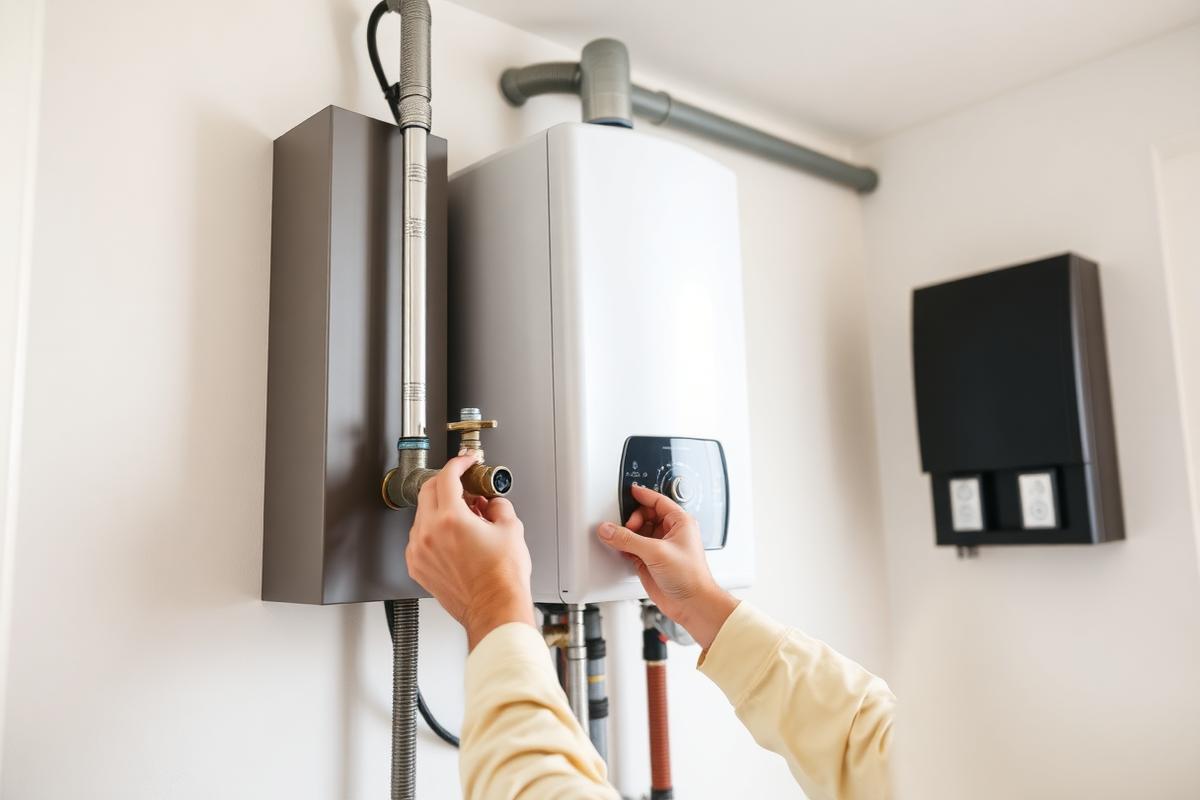
A tankless water heater does not store hot water. It heats it as it flows, which means every gallon your household uses passes directly through a narrow heat exchanger. That design is what makes tankless units compact and gives them continuous hot water, and it is also why maintenance matters more on a tankless system than it does on a conventional tank.
Right Away Plumbing and HVAC is certified for Navien tankless water heater installation, service and maintenance, and we service other tankless brands installed around Des Plaines, Park Ridge, Glenview and Chicago. This guide covers what descaling actually does, how often it is worth scheduling here, and how to tell when your unit is overdue.
Why hard water is the issue in Chicagoland
Water in this area carries dissolved minerals, mostly calcium and magnesium. When that water is heated, some of those minerals come out of solution and deposit on the hottest surfaces they touch. In a tank water heater that sediment settles harmlessly on the bottom for years. In a tankless unit, the hottest surface is the inside of the heat exchanger — the exact passage the water has to flow through.
Scale inside the exchanger does three things at once. It narrows the passage, so flow drops. It insulates the metal from the water, so the burner has to fire harder and longer for the same outlet temperature. And it creates hot spots that stress the exchanger itself. None of that is dramatic on day one; it accumulates quietly until the unit starts throwing codes or the shower stops holding temperature.
Homes with a working water softener build scale much more slowly. Homes without one, which is most of the housing stock we see in the older suburbs, build it faster.
What descaling a tankless water heater actually involves
Descaling — sometimes called flushing — means circulating a cleaning solution through the heat exchanger to dissolve mineral buildup, then rinsing it out. It is not the same as draining a tank.
- Shut down the unit and close the isolation valves on the hot and cold connections
- Connect hoses and a small pump to the service ports on those valves
- Circulate a descaling solution through the heat exchanger for a set period
- Flush with clean water until it runs clear and the solution is fully rinsed out
- Clean the cold water inlet filter screen, which catches grit and reduces flow when clogged
- Reopen the valves, purge air, and confirm the unit fires and holds its set temperature
Isolation valves make this easy or hard
Isolation (service) valves are the small ported valves at the water connections. When they were installed with the unit, descaling is a routine visit. When they were skipped to save money at installation, the same job means cutting in valves first. If you are having a unit installed or replaced, this is the one detail worth insisting on.
How often should a tankless unit be descaled?
About once a year is the right planning interval for most Chicagoland homes, and manufacturers generally recommend annual service in hard water. A few situations justify going more often.
- Large households running back-to-back showers and laundry every day
- Restaurants, salons, gyms and other commercial hot water loads
- Homes with no water softener and noticeably heavy scale on fixtures and glass
- Any unit that has already thrown a scale-related error code once
- Cascaded commercial systems, where one unit falling behind loads the others
Warning signs your tankless heater is overdue for service
None of these mean the unit is finished. Most of them mean it is asking for maintenance, and maintenance is far cheaper than a heat exchanger.
- Hot water that starts strong and fades, or swings between hot and lukewarm
- Lower flow at the showerhead than the unit used to deliver
- The heater locking out and needing a reset more than occasionally
- Error codes on the panel, especially any that reference flow, temperature or the exchanger
- Rumbling, popping or a rougher-sounding burner cycle
- A longer wait for hot water than you remember
- No documented service in the last two years
What else a full maintenance visit should cover
Manufacturers typically tie warranty coverage to documented maintenance, so keeping records of annual service protects the equipment and the coverage at the same time.
- Burner and combustion inspection, including the flame sensor and igniter
- Venting and intake check for blockage, slope, and correct termination clearances
- Condensate trap and neutralizer condition on condensing models
- Gas pressure verification under load
- Inlet filter and any in-line strainers
- Stored error history from the control board, which often explains an intermittent complaint
- Confirmation of the temperature setting and any recirculation settings
Can a homeowner descale a tankless water heater?
Some homeowners do, and with isolation valves already installed, a flush kit and careful attention to the manufacturer's instructions, it is within reach for a handy owner. What a DIY flush does not include is the combustion, venting, gas pressure and error-history side of the visit, which is where the safety-relevant findings usually turn up.
If your unit is under warranty, is showing codes, is vented through a long or complicated run, or has never been serviced, have it done professionally at least once so you know the baseline condition of the equipment.
Right Away handles tankless maintenance, descaling, repair and replacement across the area — see our tankless water heater service and installation page for what a visit includes and how to schedule one.
Frequently asked questions
How long does a tankless descaling visit take?
Most residential flushes run about an hour of circulation plus setup, rinse and testing. Units without isolation valves take longer because the valves have to be installed first.
Will descaling fix low hot water flow?
Often, yes, when the cause is scale in the heat exchanger or a clogged inlet filter. If flow is still low after a proper flush, the problem is usually elsewhere — a partially closed valve, a failing mixing valve, or a supply issue.
Do I still need annual service if I have a water softener?
A softener slows scale considerably, but annual service is still worth it for the combustion, venting, condensate and filter checks. Your technician may find the exchanger clean and simply confirm that.
Does Right Away service Navien tankless water heaters?
Yes. We are certified for Navien tankless water heater installation, service and maintenance, and we also service other major tankless brands installed in the area.
Talk to Right Away
If your tankless water heater has not been descaled in the last year, or you are not sure it ever has been, that is the place to start. Right Away Plumbing and HVAC services and maintains tankless systems for homes and businesses in Des Plaines, Park Ridge, Glenview, Chicago and the surrounding communities.
You can read more about our plumbing services, check the communities we serve, or start with plumbing in Des Plaines and Park Ridge. Planning a remodel or weighing a big replacement? Our consulting service is built for that conversation.
For installation, repair, descaling or sizing on a tankless system, see our tankless water heater services page.