
Sump Pump vs. Ejector Pump: What Is the Difference and Which One Does Your Home Need?
· 6 min read · Right Away Plumbing and HVAC
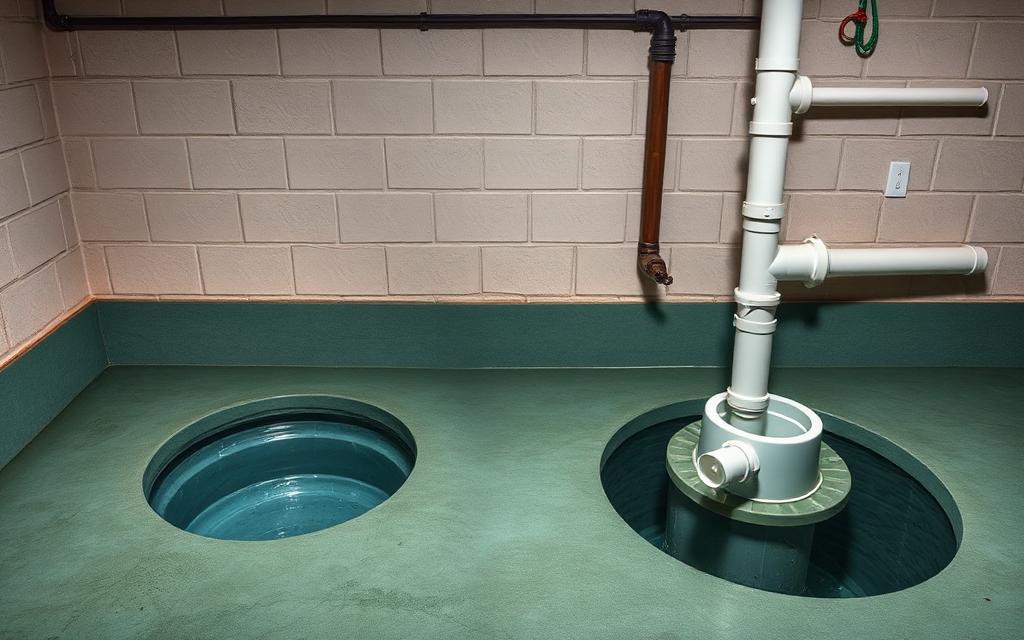
Two pumps, two pits, two very different jobs. Homeowners mix these up constantly, and the confusion matters, because putting the wrong pump in the wrong pit either does not work or creates a code and health problem.
Here is the plain-language difference, plus how to tell which one you are looking at in your own basement.
The short answer
A sump pump moves clean groundwater. An ejector pump moves wastewater and solids.
A sump pump keeps groundwater from rising into the basement and discharges it outside, away from the foundation. A sewage ejector pump takes waste from fixtures located below the sewer line and lifts it up into the building drain so it can leave through the sanitary sewer.
Sump pit vs. sump pump: they are not the same thing
One more piece of vocabulary trips people up before the pump comparison even starts. The sump pit is the hole — a lined basin set into the lowest point of the basement or crawl-space floor that the drain tile or perimeter drain empties into. The sump pump is the equipment sitting inside that pit, switching on when the water rises and pushing it out through the discharge line.
So a house can have a sump pit with no pump in it, which is common in older homes that never needed one, and a pit can fill and overflow even though nothing is technically broken, because there is no pump to empty it. When someone says the sump failed, it is worth asking whether they mean the pump, the float switch, the check valve or the discharge line, since each one is a different repair.
- Sump pit: the lined basin in the floor that collects groundwater from the drain tile
- Sump pump: the pump inside that pit that lifts the water out
- Float switch: the sensor that tells the pump when the water is high enough to run
- Check valve: keeps discharged water from draining back into the pit
- Discharge line: the pipe carrying water outside and away from the foundation
Side by side
- What it moves: sump pump handles clean groundwater and rain seepage; ejector pump handles toilet, shower and laundry waste
- Pit: sump pits are usually open or lightly covered; ejector basins are sealed and vented
- Where the water goes: sump discharges outdoors or to a storm system; ejector discharges into the sanitary sewer
- Solids handling: sump pumps are not built for solids; ejector pumps pass solids, and grinder pumps shred them
- Odor: a sump pit should not smell of sewage; an ejector basin is sealed specifically because its contents do
- Backup options: battery backup is standard practice for sump pumps and more limited for ejector pumps
- Typical service life: both commonly land in the 7 to 10 year range depending on cycles and use
How to tell which one you have
- Look at the lid. A bolted, gasketed lid with a vertical vent pipe running up through the ceiling means an ejector basin.
- Look at the water. Clear or muddy groundwater points to a sump pit. Anything else means stop and call a plumber.
- Look at the location. A pit in the lowest corner near the foundation wall is usually a sump. A basin next to a basement bathroom or laundry is usually an ejector.
- Follow the discharge. A pipe heading outside through the foundation wall is a sump discharge. A pipe going up and tying into the building drain is an ejector discharge.
- Count the pits. Plenty of Chicagoland basements have both, a few feet apart, and one has nothing to do with the other.
Which one does your home need?
One rule with no exceptions: never route sewage into a sump pit, and never route groundwater into a sanitary ejector basin. The first is a health hazard and a code violation, and the second overloads the sanitary sewer. If the two systems appear cross-connected in your home, that needs to be corrected.
You need a sump pump if
- Your basement or crawl space takes on water during heavy rain or snowmelt
- The house has drain tile or a perimeter drain that terminates in a pit
- There is a sump pit already, whether or not there is a working pump in it
- The water table in your area is high, which is common across much of Chicagoland
You need an ejector pump if
- You are adding a basement bathroom, shower or laundry below the sewer line
- There is a below-grade wet bar, utility sink or floor drain that needs to discharge waste
- An existing basement bathroom already drains into a sealed basin
You may need both if
- You have a finished basement with a bathroom and a groundwater problem
- You are finishing a basement in an older home and adding fixtures below grade
Planning a basement bathroom or finished basement
This is where the sump versus ejector question usually comes up in real life. Finishing a basement means deciding where fixtures go, how they drain, whether the existing sump can handle a newly wet space, whether an ejector basin needs to be cut into the floor, and how venting will be run. Those decisions are far cheaper to get right on paper than after the concrete is back down.
If you are planning that kind of project, our consulting service exists for exactly this: reviewing the space, the existing systems and the plan before the work starts. For an existing basement that just needs a working pump, a straightforward inspection and replacement is usually all it takes.
Protecting the basement from both kinds of water
Because sump pumps and ejector pumps handle two completely different sources of water, basement flooding risk in Des Plaines and across Chicagoland usually involves both, not one. Groundwater and storm seepage threaten the sump side, while a failing ejector system threatens a backup of wastewater into basement fixtures. Looking at them together is often the more useful question than focusing on either pump alone.
A well-planned setup lowers the risk substantially, though no system can guarantee a basement never sees water in every possible storm. A flood-prevention review looks at how the two systems and the surrounding details work together.
Right Away installs backup pump system options designed for better reliability, efficient operation, and longer service life, including backup sump pumps, battery backup, and high-water alarms for both the sump pit and the ejector basin.
Lifetime Parts & Labor Warranty on Qualifying Installations. Terms and eligibility apply. Coverage applies to qualifying company-supplied Right Away sump pump and ejector pump installations, including fittings we install, under the written warranty terms; a pump is not automatically covered unless the installation qualifies.
- Sump pump sizing, backup sump pumps and battery backup for storm-driven groundwater
- High-water alarms and monitoring for both the sump pit and the ejector basin
- Discharge routing for the sump line, including freeze protection at the outlet
- Ejector basin seals, venting and check valves that keep sewage where it belongs
- Whether the home needs both systems, and whether they are correctly separated
- How a basement finishing or remodel changes the amount of water and waste the space must manage
If you are weighing how well your basement is set up for the next storm or a future remodel, Right Away offers basement flood-prevention and sump pump consulting that reviews both systems and the surrounding setup together.
Talk to Right Away
Not sure which pump is in your basement or whether it is doing its job? Right Away Plumbing and HVAC inspects, services and installs both sump pumps and sewage ejector pumps for homes and buildings across Des Plaines and the surrounding Chicagoland suburbs.
You can read more about our plumbing services, check the communities we serve, or start with plumbing in Des Plaines and Park Ridge. Planning a remodel or weighing a big replacement? Our consulting service is built for that conversation.