
Tankless vs Traditional Water Heater: Which Is Better for Chicago-Area Homes?
· 9 min read · Right Away Plumbing and HVAC
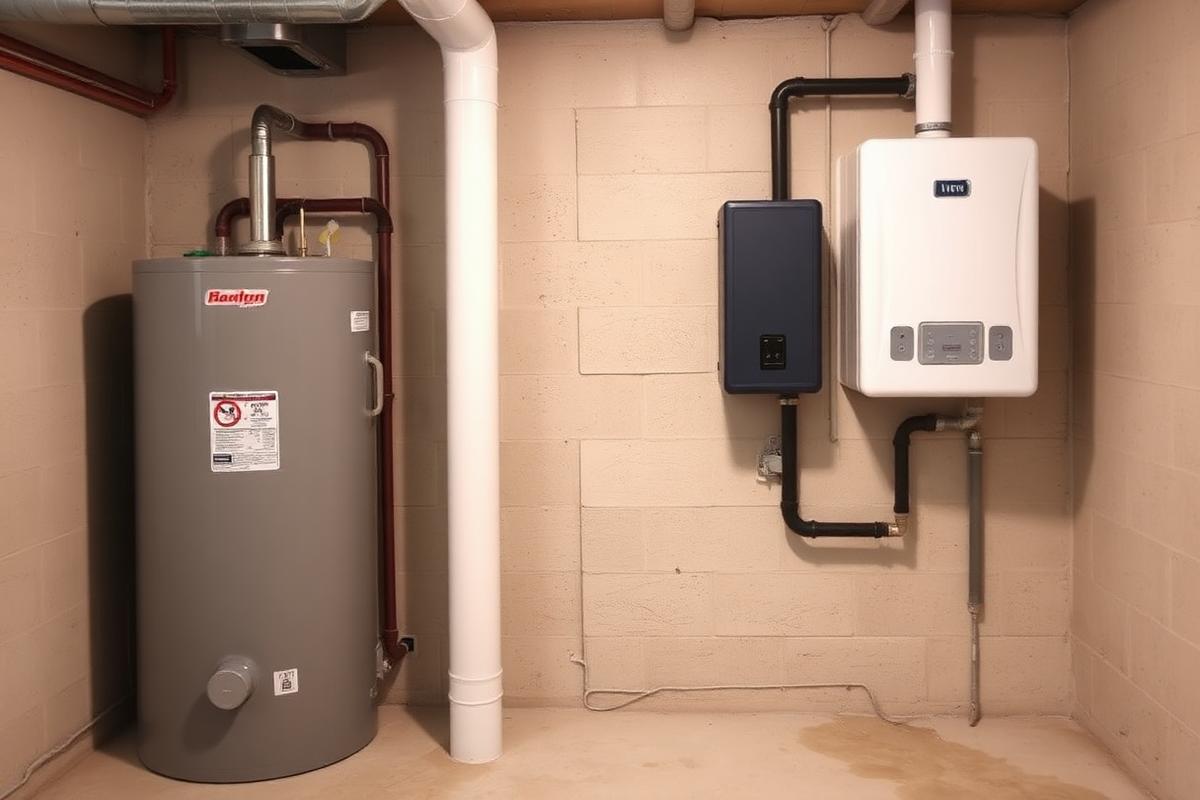
When a water heater is near the end of its life, the first question most homeowners ask is whether to switch to tankless. It is a fair question and it does not have a universal answer. Tankless is genuinely better for some houses and a poor trade for others, and the deciding factors are usually specific to the building rather than to the technology.
Below is the comparison we walk through with homeowners in Des Plaines, Park Ridge, Mount Prospect and Chicago, written the way we would explain it standing in your basement.
How each system works
A traditional water heater keeps 40, 50 or 75 gallons hot in an insulated tank around the clock. When you open a tap, stored hot water leaves the top of the tank and cold water enters the bottom to be reheated. You get a large amount of hot water immediately and a recovery period once it is used up.
A tankless unit stores nothing. When flow is detected, a burner fires and heats water as it passes through a heat exchanger. Hot water continues as long as the tap is open, but the unit can only add so many degrees to so many gallons per minute — its capacity is a flow rate, not a volume.
Where tankless clearly wins
The space argument is more persuasive than homeowners expect. In a bungalow or a townhouse where the utility room is already crowded, reclaiming the tank footprint can change what the room is usable for.
- Continuous hot water, so back-to-back showers do not run the household out
- Floor space — a wall-hung unit frees the footprint a tank occupied, which matters in small mechanical rooms and finished basements
- No standby heat loss from keeping a tank hot when nobody is home
- No large stored volume to dump on the floor if the vessel fails
- Longer service life than a typical tank when it is sized correctly and descaled on schedule
Where a traditional tank still makes sense
If your current tank has never actually run out on you, the main benefit of tankless is space and longevity rather than performance. That may still be worth it — but it should be a decision, not an assumption.
- Lower equipment and installation cost, especially when replacing like for like
- No gas line upsizing or new venting in most straight replacements
- Simple, familiar service that any plumber can perform
- Handles a big simultaneous draw well, since it delivers stored volume rather than a flow rate
- Well suited to smaller homes and modest hot water use, where continuous supply is not the problem being solved
The Chicago-area details that decide it
Cold incoming water in winter
A tankless unit is rated by how many gallons per minute it can raise by a given number of degrees. Incoming water is much colder here in January than in July, so the same unit delivers less usable flow in winter. This is the single most common reason a tankless system disappoints: it was sized for mild conditions and then met a Chicago February.
Gas supply and venting
Tankless burners fire hard while running. The existing gas line that fed a tank is frequently undersized for that demand, and venting requirements are different from an older atmospheric tank's. In many older homes the conversion is straightforward; in some it means new gas piping and a new vent run, and that is a real cost that belongs in the comparison up front.
Hard water and maintenance
Both systems suffer from hard water, but they suffer differently. A tank collects sediment on the bottom and tolerates it for years. A tankless unit scales inside the heat exchanger and needs annual descaling to keep performing. Choosing tankless means committing to that maintenance.
Where the unit will live
Wall-hung units need a suitable exterior wall or vent path, condensate handling on condensing models, and access for service. A basement corner that worked for a tank does not always work for a tankless install without some rework.
Which one should you choose?
A short version of the way we usually land on it:
- Frequently running out of hot water, or a household that has grown: tankless is likely worth it
- Tight mechanical room, or planning to finish the basement: tankless frees real space
- Straight replacement of an aging tank in a smaller home with adequate hot water: a quality tank is often the better value
- Older gas service and a difficult vent path with a modest budget: tank, unless the other benefits justify the added work
- Remodel or new construction, where walls and piping are already open: the best time to go tankless
- Commercial or high-demand use: often tankless in cascade, sized to actual peak flow
Either way, sizing is what determines whether you are happy with the result. We cover sizing, venting, gas capacity and Navien equipment on our tankless water heater installation and repair page, and we will quote both options honestly when a tank is the better call.
Frequently asked questions
Does a tankless water heater really never run out of hot water?
It will not run out the way a tank does, but it has a flow limit. Exceed the gallons per minute it can heat — two showers plus a dishwasher on a cold January morning, for example — and outlet temperature drops. Correct sizing is what prevents that.
Will tankless lower my gas bill?
It removes standby losses from keeping a tank hot, so most households see some reduction. How much depends on your hot water use and the equipment being replaced, so we would rather explain the tradeoff for your home than quote a number that may not apply to it.
Can I put a tankless unit where my old tank was?
Often, yes, but not always. It depends on gas line capacity, the available vent path, condensate drainage and service access. We evaluate all four before recommending the conversion.
Do tankless water heaters last longer than tanks?
Generally yes, when they are sized right and descaled annually. Skipping maintenance in hard water is what erases that advantage.
Talk to Right Away
If your water heater is aging and you want a straight answer rather than a sales pitch, Right Away Plumbing and HVAC will size both options for your home and explain what each one would actually require. We are certified for Navien tankless water heater installation, service and maintenance and we install conventional tanks as well.
You can read more about our plumbing services, check the communities we serve, or start with plumbing in Des Plaines and Park Ridge. Planning a remodel or weighing a big replacement? Our consulting service is built for that conversation.
For installation, repair, descaling or sizing on a tankless system, see our tankless water heater services page.