Thermostat Says “Heat On” but There Is No Heat? What Chicago-Area Property Owners Should Check
· 11 min read · Right Away Plumbing and HVAC
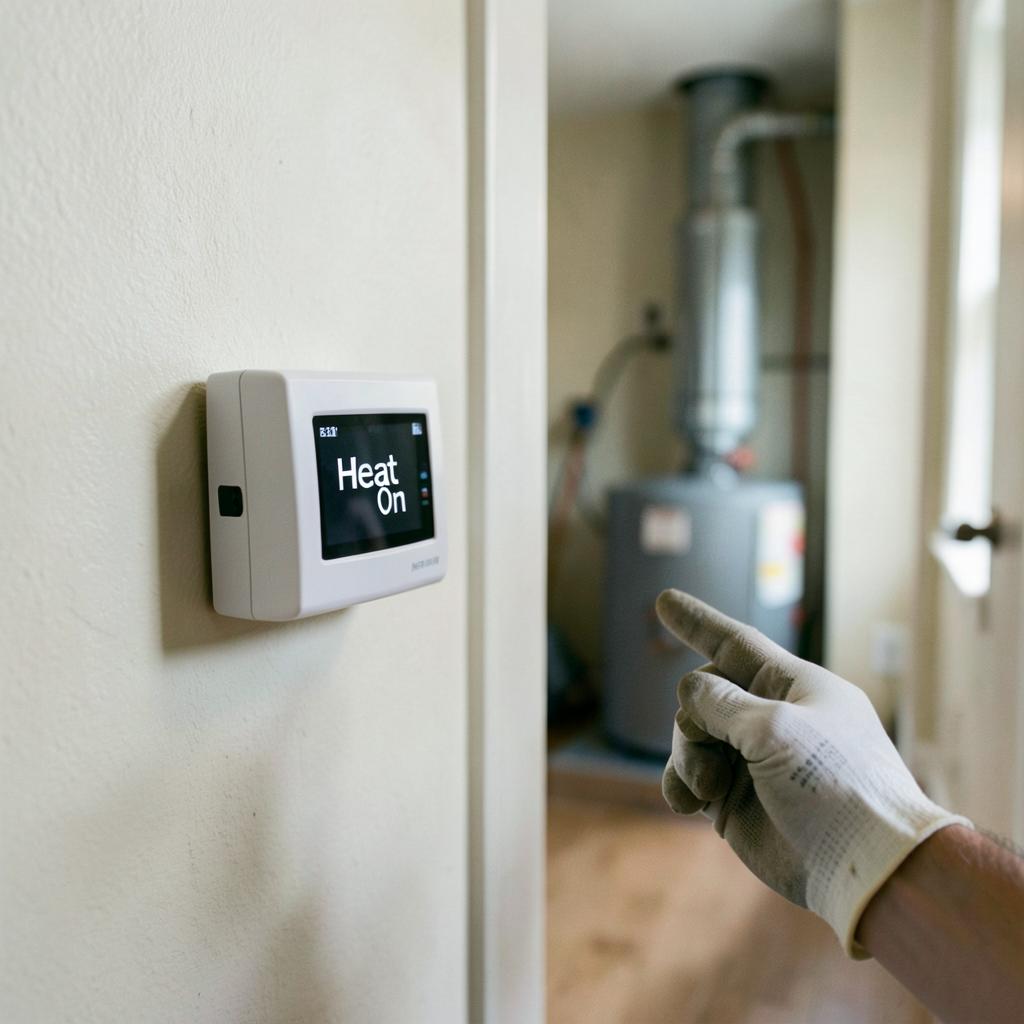
When a thermostat displays “Heat On” but the furnace does not start — or the system runs without warming the building — the thermostat may be doing its job. “Heat On” usually means the thermostat is requesting heat. It does not prove that the furnace, boiler, heat pump, wiring or safety circuit completed the request.
Some basic observations can help identify the next step. However, do not bypass a safety switch, repeatedly reset equipment or open a gas or energized electrical compartment. If you smell gas, see smoke, hear a carbon-monoxide alarm or notice signs of overheating, leave the affected area and follow the appropriate emergency and utility procedures.
Right Away Plumbing and HVAC diagnoses thermostat, furnace, boiler and heat-pump problems in Des Plaines, Chicago and surrounding suburbs. This guide explains what you can check safely and what common failures require professional testing.
What “Heat On” actually means
The thermostat compares the room temperature with the heating setpoint. When the room is colder than the setpoint, it sends a heating request to the equipment. Depending on the system, that request may pass through low-voltage wiring, a zone panel, furnace control board, boiler relay, heat-pump controls or building automation before heat reaches the room.
A failure anywhere in that chain can leave “Heat On” displayed even though the equipment is silent. The same message can also remain visible during a normal programmed delay, such as compressor protection or a furnace control sequence.
The key question is not only what the thermostat displays. It is where the heating sequence stops.
For the broader diagnosis beyond this symptom, see what can cause a furnace to stop working; the visible FAQ separates safe observations from technician-only checks.
City homes can review residential furnace repair in Chicago.
For furnace, boiler or heat-pump faults, start with heating repair in Chicago.
Safe checks to make before requesting service
These observations help distinguish a thermostat problem from a power, ignition, airflow, zoning or equipment failure.
1. Confirm the thermostat mode and setpoint
Set the thermostat to Heat and raise the setpoint a few degrees above the displayed room temperature. Confirm that the schedule, Away mode or energy-saving program is not overriding your change.
If the thermostat was just adjusted, allow several minutes for the system to respond. Many thermostats and heat pumps use a short protective delay.
2. Set the fan to Auto
The Fan On setting can run the blower without producing heat. Set the fan to Auto so it operates with the heating cycle. If the blower continues moving cool air, note whether the outdoor unit, furnace burners or boiler also operate.
3. Check thermostat power
For a battery-powered thermostat, replace the batteries with the correct type if the screen is dim, blank or behaving unpredictably. A hard-wired thermostat may lose power because of a tripped service switch, open equipment door switch, blown low-voltage fuse or control problem.
Do not keep replacing a low-voltage fuse if it blows again. A repeated failure can indicate a wiring short or failed component that needs to be located before another fuse is installed.
4. Check accessible breakers and switches once
Confirm that the labeled furnace, boiler, air-handler and heat-pump breakers are on. Also check the normal service switch near the equipment if it is safely accessible.
If a breaker is tripped, do not repeatedly reset it. A breaker that trips again may indicate an electrical fault and should be professionally diagnosed.
5. Look at the air filter
A severely restricted filter can reduce airflow and contribute to furnace overheating or limit-switch shutdowns. Replace a visibly dirty disposable filter with the correct size and type. Make sure return grilles and supply registers are not blocked.
A clean filter does not rule out a blower, duct, control or heating-equipment problem, but it removes one common airflow restriction.
6. Record what happens after the heat request
Listen and observe without opening the cabinet. Useful details include:
- The thermostat says Heat On, but the equipment is completely silent
- The furnace clicks but does not ignite
- The inducer starts, but the burners never light
- The burners light and shut off after a few seconds
- The blower runs, but the air stays cool
- The furnace starts and stops every few minutes
- The boiler runs, but one zone or radiator remains cold
- The heat pump runs, but AUX or backup heat does not operate
- An error code or warning light appears
Common reasons the thermostat calls for heat but the furnace does not start
Low-voltage wiring or control-power failure
The thermostat may display normally while a loose wire, damaged cable, blown control fuse, failed transformer or board problem interrupts the heating signal. A technician can meter the request at the thermostat and equipment to determine where it stops.
Open safety switch or furnace lockout
Modern furnaces monitor venting, flame, temperature and other operating conditions. If a safety device does not prove the correct condition, the control may stop the ignition sequence.
Pressure-switch faults, limit trips, flame-proving problems and condensate drainage issues can all produce a no-heat condition.
Never jumper or bypass a furnace safety switch. The recorded fault and operating sequence should be tested instead.
Igniter, flame sensor or gas-control problem
If the furnace begins its sequence but does not establish heat, the problem may involve the igniter, flame sensor, gas valve, burners or control board.
The exact stopping point matters: a furnace that never ignites is a different diagnosis from one that lights and shuts down immediately.
Restricted airflow and overheating
A dirty filter, blocked return, closed registers, blower problem or other airflow restriction can cause the furnace to overheat and open its limit switch.
The blower may continue running while the burners remain off, making it feel as though the thermostat is requesting only cold air.
Thermostat configuration or compatibility
A replacement or smart thermostat must be configured for the actual equipment. Heat pumps, dual-fuel systems, multistage furnaces, boilers and communicating systems have different control requirements.
Incorrect staging, reversing-valve, balance-point or backup-heat settings can cause poor operation even when the thermostat appears normal.
What if the furnace runs but the house still does not get warm?
When the equipment operates but comfort does not improve, the problem may be airflow, heat delivery, equipment capacity or building controls rather than the thermostat itself.
Possible causes include:
- A clogged filter or weak blower airflow
- Burners shutting down on a safety limit
- Leaking or disconnected accessible ductwork
- A zone damper that does not open
- A boiler zone valve or circulator problem
- Air trapped in a hot-water heating zone
- An economizer bringing excessive outdoor air into a commercial rooftop unit
- A heat pump with failed or incorrectly staged backup heat
- A thermostat located near a draft, supply register, exterior wall or heat source
For multi-zone homes and commercial buildings, note whether every area is cold or only one zone. One cold area often points toward a zone-control or distribution problem while the main heating equipment continues operating. Commercial properties can see how we approach these issues on our commercial heating service page.
If the building is being bought, sold or evaluated, a detailed property inspection can document heating-equipment condition alongside the rest of the mechanical systems.
Thermostat, furnace, boiler or heat pump: which service do you need?
You do not need to diagnose the exact failed part before calling. Describe what the thermostat displays and what the equipment does next.
- Start with thermostat and heating-control repair when the display is blank, the temperature is inaccurate, programming is wrong, wiring is damaged or zones do not respond.
- Request furnace repair when the furnace clicks, buzzes, fails to ignite, lights and drops out, short-cycles or runs its blower without producing dependable heat.
- Request boiler repair when the boiler loses pressure, trips a low-water control, leaks or runs without warming the radiators or zones.
- Request heat-pump service when the outdoor unit does not run, AUX heat does not operate, the unit is stuck in defrost or the thermostat is not staging backup heat correctly.
Right Away can test the complete sequence so the service is routed correctly even when the symptom could come from more than one component. For control-side diagnosis, see thermostat and heating-control repair.
For ignition and no-heat faults, see furnace repair and no-heat service.
For radiators, zones and pressure problems, see boiler repair.
For defrost or backup-heat problems, see heat pump service.
You can also browse all of our heating services.
When the problem needs prompt professional diagnosis
Stop operating the equipment and request qualified help when you notice:
- A gas odor, smoke, soot or scorching
- A carbon-monoxide alarm
- A breaker that trips again after one reset
- Electrical odors, buzzing or visible heat damage
- Water leaking near electrical components
- Repeated safety lockouts
- A furnace that overheats or rapidly short-cycles
- A boiler low-water control that repeatedly trips
- Indoor temperature falling to a level that may endanger occupants or plumbing
The U.S. Consumer Product Safety Commission recommends working smoke and carbon-monoxide alarms and professional inspection of fuel-burning heating systems. Carbon monoxide is colorless and odorless, so the absence of a smell does not prove that combustion equipment is safe. If you are unsure whether your situation is urgent, contact Right Away and describe what the system is doing.
Heating-control and no-heat service in Chicago and the suburbs
Right Away Plumbing and HVAC works on thermostats, furnaces, boilers, heat pumps, zoning and commercial heating controls throughout Chicago and the surrounding suburbs.
For a Chicago address, call 773-250-6060. For Des Plaines and the surrounding suburbs, call 847-550-3322.
Our office is at 2093 Rand Rd, Des Plaines, IL 60016. We are licensed, bonded and insured and provide residential and commercial plumbing, heating, cooling and mechanical service.
When requesting service, tell us what the thermostat displays, the requested and actual room temperature, whether the equipment is silent, clicking, running or short-cycling, whether the blower or outdoor unit operates, any fault code, warning light, odor, leak or unusual noise, and which rooms or zones are affected. Those details help us prepare for the correct heating-control or equipment diagnosis.
Start with plumbing and heating in Des Plaines.
In the city, see our Chicago service area.
Every community we cover is listed on our service areas page.
Frequently asked questions
Why does my thermostat say Heat On when the furnace is not running?
The thermostat may be sending a heating request while power, wiring, a safety switch, the ignition sequence or a furnace control prevents operation. A short programmed delay may also be normal. If the settings and power checks are correct, the thermostat signal and furnace sequence should be tested before replacing parts.
How long should I wait after the thermostat says Heat On?
Allow several minutes because some systems use protective delays. If the equipment remains silent or repeatedly attempts to start without completing a heating cycle, record what it does and request service.
Is the thermostat bad if the furnace will not start?
Not necessarily. The cause may be the thermostat, but it may also be a blown low-voltage fuse, transformer, wiring connection, door switch, pressure switch, igniter, flame sensor, gas control, limit switch or control board. Testing identifies where the signal stops.
Why is the blower running but the air is cold?
The thermostat fan may be set to On, or the furnace may have stopped its burners because of an ignition or safety problem while the blower continues operating. Heat pumps and commercial systems can have additional staging or outdoor-air causes.
Can I bypass a furnace safety switch to restore heat?
No. Safety switches protect against unsafe venting, overheating, flame or other operating conditions. Bypassing one can create a serious hazard and erase information needed for diagnosis.
Does Right Away repair thermostats and no-heat problems in Chicago?
Yes. Right Away provides thermostat, heating-control, furnace, boiler and heat-pump service in Chicago and surrounding suburbs. Chicago customers call 773-250-6060; suburban customers call 847-550-3322.
Talk to Right Away
If your thermostat says Heat On but the building is still cold, do not guess which part failed. Right Away Plumbing and HVAC can trace the heating request, test the equipment sequence and explain the repair options.
Call 773-250-6060 for Chicago or 847-550-3322 for Des Plaines and the surrounding suburbs, or request service online.
You can read more about our plumbing services, check the communities we serve, or start with plumbing in Des Plaines and Park Ridge. Planning a remodel or weighing a big replacement? Our consulting service is built for that conversation.