
Water Heater Leaking From the Bottom? Repair or Replace?
· 7 min read · Right Away Plumbing & HVAC
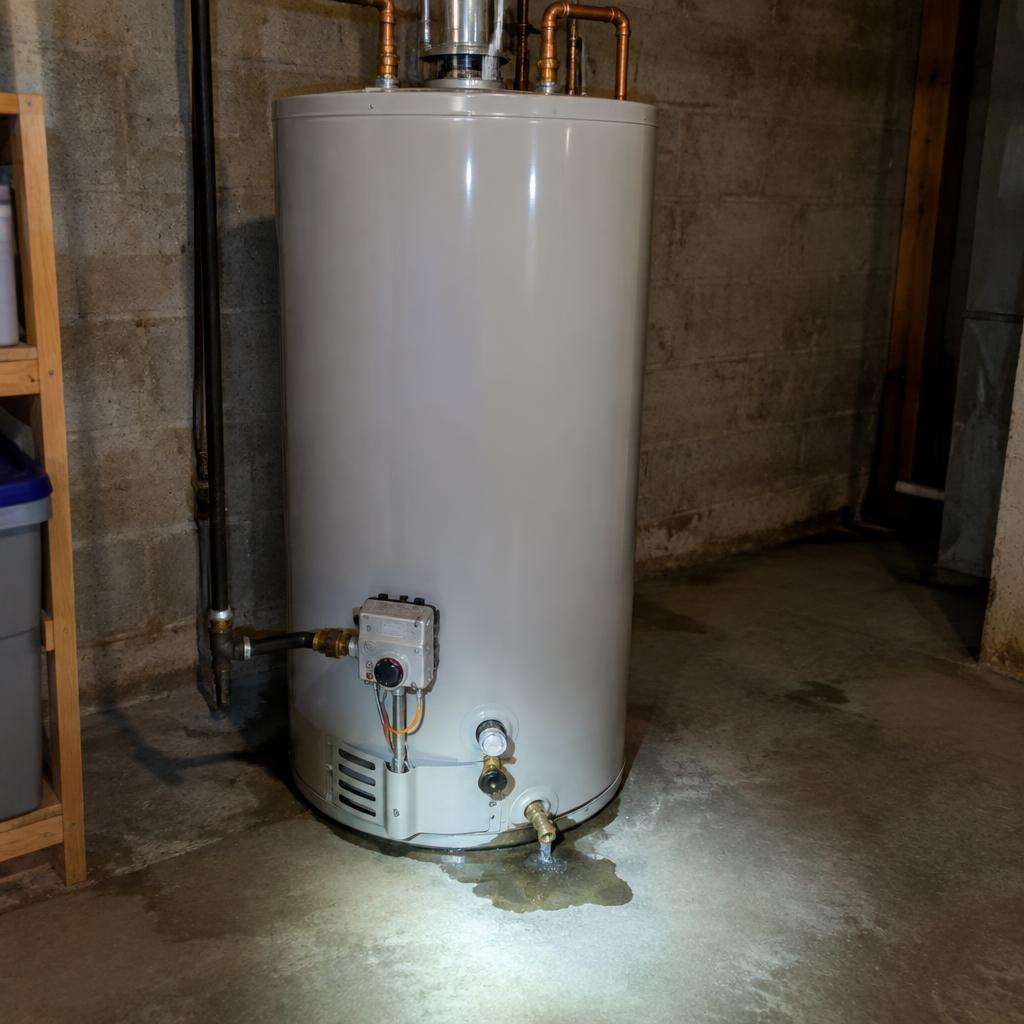
Finding water around the bottom of a water heater does not automatically mean the entire unit has failed. The source may be a valve, a piping connection, condensation or the tank itself.
The important part is identifying where the water is actually coming from before deciding whether the heater should be repaired or replaced.
First, find the source of the water
Water naturally collects at the lowest point, so a leak that appears to be coming from the bottom of the tank may actually begin higher up.
Look carefully around the hot- and cold-water connections, valves and visible piping above the heater. Water can run down the jacket and collect at the base.
Do not remove covers or electrical components to investigate a leak yourself.
If the water begins at a supply pipe or connection rather than the heater, our water leak repair service explains the next steps.
The drain valve may be leaking
Most tank-style water heaters have a drain valve near the bottom of the tank. The valve is used when the heater is flushed or drained.
If water is collecting directly around the drain-valve connection, the valve or its connection may be the source. Depending on the condition of the tank and valve, this can sometimes be repaired without replacing the entire water heater.
Check the temperature-and-pressure relief discharge
A water heater also has a temperature-and-pressure relief valve, commonly called a T&P valve.
If the valve is releasing water, the cause should be diagnosed rather than simply plugging or disabling the discharge. Excess temperature, excess pressure, a failed valve, expansion problems or other conditions can cause discharge.
Never cap or block a T&P relief line.
Condensation can look like a leak
Under certain operating conditions, condensation can form on or around a water heater and collect near the base.
This is different from a tank leak, but repeated water around the heater should still be investigated because it can damage flooring, drywall and nearby equipment.
When the tank itself is leaking
A leaking storage tank is different from a leaking valve or fitting.
If the steel tank has corroded through and water is escaping from the tank itself, the tank is generally not repaired by patching the leak. Replacement is normally the appropriate solution.
That is why locating the source matters. Replacing a water heater because of a repairable fitting wastes money; attempting to repair a failed tank usually delays a replacement that is already necessary.
When replacement is the right call, our water heater repair and replacement page explains how we size and install conventional tanks, and our
tankless water heaters page covers the on-demand alternative.
Signs the water heater deserves a closer inspection
Schedule service when you notice water repeatedly collecting around the heater, rusty or discolored water, corrosion around fittings, irregular hot-water temperature, unusual noises, repeated relief-valve discharge or a significant drop in hot-water capacity.
Age is useful information, but age alone does not determine whether a unit must be replaced. The actual failure and overall condition of the heater matter more.
Repair or replacement?
A repair can make sense when the tank is sound and the failure is limited to a serviceable component or connection.
Replacement deserves stronger consideration when the tank itself is leaking, corrosion is extensive, multiple components are failing, or the cost and condition of the unit make continued repairs impractical.
Right Away diagnoses the source first and can explain the repair and replacement options based on the heater that is actually installed.
You can see the full range of work on our plumbing services page and our
Des Plaines plumbing service-area page.
Ask for the repair finding before choosing a replacement
A recommendation should identify the failed part or the confirmed tank leak, then explain what the proposed work addresses. A sound tank with a leaking serviceable connection is a different decision from corrosion through the storage vessel. Pressure, expansion, venting and the surrounding connections may also need attention; replacing a valve without addressing an underlying problem can leave the cause unresolved.
If replacement is needed, ask what is included in the proposed installation and what access or building approvals are required. A tankless conversion is a separate sizing and installation decision, not an automatic answer to a wet floor.
For a larger renovation or an independent scope review, our plumbing consulting service can help frame the next questions; an active leak should be handled first.
Water is actively leaking: protect the area before investigating
Keep people and pets away from the wet area. Do not step into water near an electrical panel, wiring, outlets or the heater's electrical controls. If you smell gas, leave the building and contact the gas utility or emergency services from a safe location; do not operate switches or use a phone inside the affected area.
A known, accessible cold-water shutoff may limit additional water entering the heater, but closing it does not instantly empty the tank or make the appliance safe. Follow the shutdown instructions for the exact model only when its controls can be reached safely. If you cannot identify or safely reach the controls, explain that when you call rather than experimenting with valves or breakers.
Do not remove burner or electrical covers, open the drain valve, tighten hot fittings or block the relief discharge to find a quick fix. Water in the pan can be hot, and opening a valve can release more. Do not restore operation until the source has been checked and the equipment is safe to use.
What to tell us about a water heater leaking from the bottom
From a safe, dry location, describe the first place you can see water: a pipe connection above the heater, the drain-valve area, the end of a relief discharge pipe or underneath the tank jacket. That observation helps plan the visit, but water can travel down the outside of the heater, so its final puddle is not a diagnosis.
Tell us whether it is a storage tank or tankless unit, gas or electric, and whether the leak is a steady stream or an occasional drip. If the model label is already visible from a safe position, its model and serial number can help identify the equipment. Do not move the heater, reach across wet equipment or remove a cover to photograph a label.
Also mention whether hot water has stopped, the pan is overflowing, nearby flooring is wet or a safe shutoff has already been closed. In a condo or managed building, let us know who can authorize access and any building-wide water shutdown. Do not arrange a shared shutdown yourself without the building's approval.
Water heater service in Des Plaines and Chicagoland
Right Away Plumbing & HVAC repairs and replaces tank-style and tankless water heaters throughout Des Plaines and surrounding Chicagoland communities.
We are based at 2093 Rand Rd, Des Plaines, IL 60016.
Call 847-550-3322 for Des Plaines and surrounding suburbs or 773-250-6060 for Chicago.
If water is collecting around the bottom of the heater, we can determine whether the source is a repairable component or whether the tank itself needs replacement.
Ready to have it looked at? Request service and describe what you are seeing around the heater.
Frequently asked questions
Does water under the heater always mean the tank has failed?
No. Water can come from a connection, drain valve, relief discharge, condensation or the tank itself. The source must be identified before deciding whether a repair or replacement is appropriate.
Does closing the water supply make a leaking heater safe?
No. Water and stored heat remain in the tank, and gas or electrical hazards may still be present. Keep away from wet electrical equipment and follow the exact model's shutdown instructions only when its controls can be reached safely. Arrange professional diagnosis before restarting.
Talk to Right Away
If water is collecting around the bottom of the heater, call Right Away Plumbing & HVAC at 847-550-3322 for Des Plaines and the suburbs or 773-250-6060 for Chicago. We diagnose the source first, then walk you through the repair and replacement options for the unit you actually have.
You can read more about our plumbing services, check the communities we serve, or start with plumbing in Des Plaines and Park Ridge. Planning a remodel or weighing a big replacement? Our consulting service is built for that conversation.
For installation, repair, descaling or sizing on a tankless system, see our tankless water heater services page.