Furnace Making Noise? What the Sound Is Telling You
· 7 min read · Right Away Plumbing and HVAC
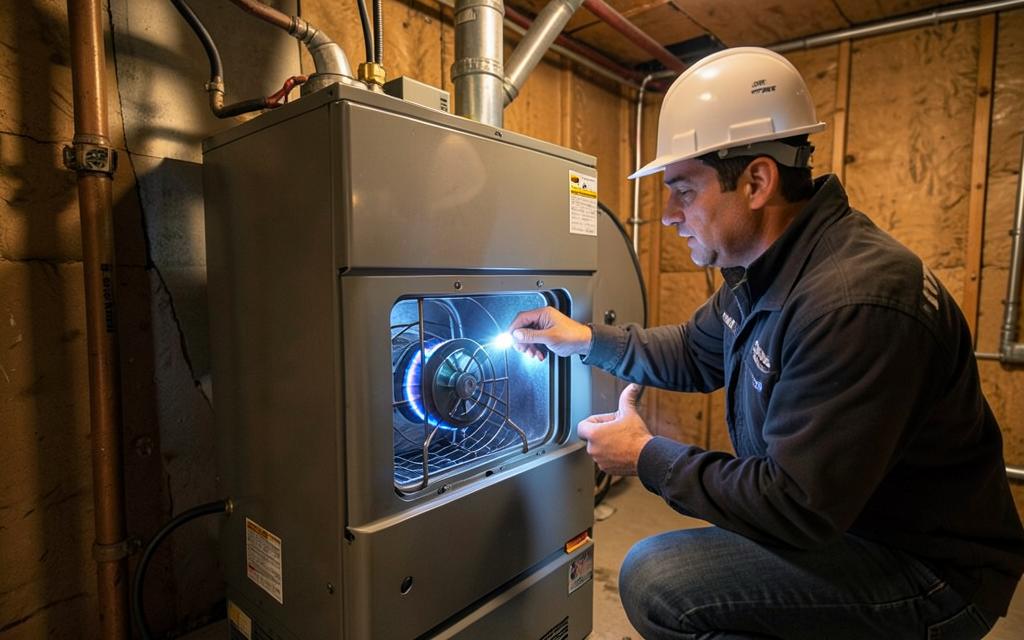
The first cold night in Arlington Heights is when a lot of furnaces get noticed. The system has sat idle since spring, the thermostat calls for heat, and something in the basement bangs, squeals or rattles that did not do it last year.
Some furnace noise is normal: a soft click from the ignition sequence, the hiss of burners lighting, the steady whoosh of the blower. A new, louder or different sound usually means a specific part is wearing, loose or working harder than it should. The type of noise and when it happens in the heating cycle tell a technician a lot before any panel comes off.
What common furnace noises usually mean
A loud bang or boom when the burners light
Technically this is delayed ignition: gas collects in the combustion chamber for a moment before it lights, then ignites all at once. In plain English, the flame is starting late. Dirty burners, a weak igniter, low gas pressure or a flame sensor that is slow to prove the flame can all cause it.
Treat a repeated bang as a safety issue. Delayed ignition stresses the heat exchanger over time. If the furnace booms on startup, turn it off at the thermostat and schedule diagnosis rather than letting it keep cycling.
In plain words: if your furnace goes BOOM when it starts, shut it off and call us. Don't let it keep doing it.
Squealing or high-pitched whining
On older belt-drive furnaces, a squeal often comes from a worn or loose blower belt. On direct-drive blowers, it more often points to dry or failing motor bearings. An inducer motor—the small fan that pulls combustion gases out through the vent—can also whine as its bearings wear.
Motor bearings do not repair themselves. A squeal that gets louder over a few weeks is usually a motor heading toward failure, and replacing it on a scheduled visit is easier than losing heat on a January weekend.
In plain words: a squeal is usually a motor wearing out. Fix it now, before it quits on the coldest night.
Rattling, buzzing or metal-on-metal scraping
A rattle can be as simple as a loose access panel or a duct hanger vibrating. It can also be a blower wheel that has come loose on its shaft, a failing inducer motor or, less commonly, a cracked heat exchanger that shifts as it expands and contracts. Scraping is more urgent than rattling because it usually means a moving part is touching something it should not.
In plain words: a rattle can be a loose screw. Scraping means something is rubbing. Scraping needs a tech soon.
Humming, clicking without ignition, or popping ducts
A loud hum can come from a capacitor, transformer or motor that is straining electrically. Repeated clicking with no flame means the control board is trying the ignition sequence and failing—see our guide on an igniter that glows but never lights. Popping or ticking in the ductwork as it warms is usually thermal expansion of sheet metal, which is often harmless, although undersized or restricted ducts make it worse.
In plain words: if your furnace clicks but no flame comes on, shut it off and call us. Ducts that tick as they warm up are usually fine.
For the broader diagnosis beyond this symptom, see what can cause a furnace to stop working; the visible FAQ separates safe observations from technician-only checks.
Safe checks a homeowner can make
These checks do not require opening the burner compartment or touching wiring. If a check does not settle the noise, leave the rest to a technician.
In plain words: change the filter, close the panel door, open the vents. Don't open the furnace itself.
- Note exactly when the noise happens: at ignition, when the blower starts, during the run or at shutdown.
- Check the air filter. A clogged filter makes the blower work harder and can cause whistling at the return grille.
- Make sure the blower access door is fully seated; many furnaces have a door safety switch and loose doors rattle.
- Confirm supply and return registers are open and not blocked by furniture or rugs.
- If you smell gas, hear a loud boom repeatedly, or a carbon monoxide alarm sounds, leave the house and call the gas utility or 911 from outside.
When to call for furnace repair
Call when the noise is new and persistent, when it comes with a burning or electrical smell, when the furnace short-cycles or trips a breaker, or any time you hear delayed ignition. It is also worth scheduling if a squeal or rattle is getting louder week to week; small mechanical problems tend to become no-heat calls in the coldest part of the season.
Do not keep resetting the furnace or cutting power repeatedly to quiet it. Repeated resets can hide the fault code a technician needs and can put extra stress on an ignition or motor problem.
In plain words: new noise that won't go away? Call. Don't keep flipping the switch to make it stop.
What our technician does
We start by running the furnace through a full heating cycle and listening for where and when the sound occurs. From there the checks are targeted: igniter and flame-sensor condition, burner alignment and gas pressure for ignition noises; blower wheel, motor bearings, capacitor and belt for squeals and hums; inducer motor, vent connections and cabinet hardware for rattles.
Where ignition or heat-exchanger concerns exist, we check combustion and the heat exchanger itself. If a heat exchanger is compromised, the furnace needs to stay off until a qualified technician evaluates the safe repair or replacement options. You get an explanation of what we found and the options before any work is done.
In plain words: we listen, find the part making the noise, and tell you what it costs to fix before we touch it.
The Arlington Heights angle
Arlington Heights has a wide mix of housing, from mid-century ranches and split-levels to newer construction and townhomes. In older homes, a furnace may have been replaced once or twice into ductwork that was sized for different equipment, which can add air noise and duct popping. Many furnaces in finished basements are also tucked into tight closets where a small rattle carries through the house.
Our shop is on Rand Road in Des Plaines, a short drive from Arlington Heights, so a furnace noise that shows up on the first cold week can usually be looked at before it becomes a no-heat problem.
In plain words: we're close by, so a noisy furnace in Arlington Heights can get checked before you lose heat.
For the full range of heating work we do, see our heating services.
Noise that comes with lost heat is covered on our furnace repair page.
Local details and phone routing are on our Arlington Heights service area page.
If the furnace clicks but never lights, read why an igniter glows but the burners never light.
Ready to have it looked at? Request furnace service and tell us what the noise sounds like.
Frequently asked questions
Is it normal for a furnace to make noise when it starts?
A soft click, the hiss of burners lighting and the sound of the blower are normal. A loud bang, boom, squeal or grinding is not, and should be checked.
Is a banging furnace dangerous?
A bang at ignition is usually delayed ignition, which can stress the heat exchanger. Turn the furnace off at the thermostat and have it diagnosed rather than letting it keep cycling.
Why does my furnace squeal when the blower comes on?
Most often a worn blower belt on older furnaces or failing motor bearings on direct-drive blowers. Neither improves on its own, so plan a repair before the motor stops.
Do you repair noisy furnaces in Arlington Heights?
Yes. Right Away diagnoses and repairs furnaces in Arlington Heights and the surrounding suburbs. Call 847-550-3322 or use the request-service form.
Talk to Right Away
If your furnace in Arlington Heights or a nearby suburb has started banging, squealing or rattling, call 847-550-3322. In Chicago, call 773-250-6060. You can also send a request and we will follow up to schedule.
You can read more about our plumbing services, check the communities we serve, or start with plumbing in Des Plaines and Park Ridge. Planning a remodel or weighing a big replacement? Our consulting service is built for that conversation.
Service areas for this work include Arlington Heights and Mount Prospect. Questions about your building? Use our contact page.