
Heat Pump Defrost, Ice and Auxiliary Heat: What Is Normal?
· 8 min read · Right Away Plumbing and HVAC
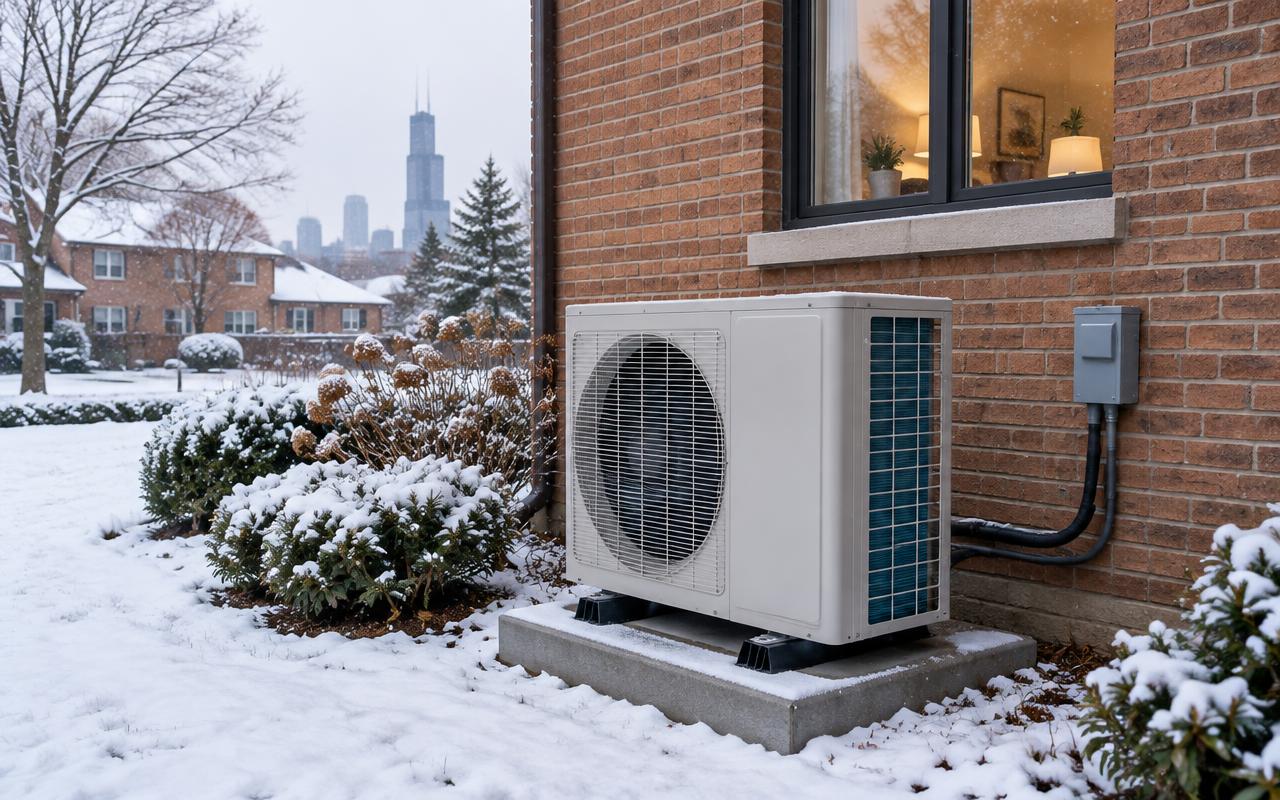
A heat pump does not feel or sound like a gas furnace in winter. It usually sends out warm air at a lower temperature, runs for longer stretches and periodically changes direction to clear frost from the outdoor coil. Those differences can look like a failure when the system is working normally.
The useful question is whether the heat pump clears frost, maintains the thermostat setting and brings on backup heat only when the controls call for it. This guide separates normal cold-weather operation from ice, control and airflow problems that need diagnosis.
Why a heat pump develops frost
In heating mode, the outdoor coil is colder than the outdoor air. Moisture can condense and freeze on that coil, especially in damp weather near freezing. A light, even layer of frost is expected. The controls monitor time, coil temperature or both and start a defrost cycle before that frost blocks airflow.
During defrost, the system briefly reverses so the outdoor coil warms. The outdoor fan may stop, and a cloud that looks like smoke can rise as the ice melts. That cloud is water vapor. Indoors, electric auxiliary heat or a dual-fuel furnace may temper the air while defrost runs.
Normal defrost versus an icing problem
Normal frost clears during a short defrost cycle and leaves the coil open to airflow. A solid block of ice, ice that returns immediately, or a unit that never seems to defrost points to a fault. Possible causes include a failed sensor or defrost board, restricted outdoor airflow, a fan problem or low refrigerant from a leak.
Keep snow, leaves and windblown debris away from the outdoor unit, but do not chip ice from the coil or pour hot water over it. The thin aluminum fins and refrigerant tubing are easy to damage. If ice is not clearing, turn the system off and request diagnosis.
- Normal: light frost that clears and open coil surfaces after defrost
- Normal: brief steam outdoors and a temporary change in system sound
- Needs service: thick ice covering the coil, fan or cabinet
- Needs service: repeated defrost without the house recovering temperature
- Needs service: grinding, electrical odor, a tripped breaker or water entering the house
Why heat-pump air feels cooler than furnace air
A furnace produces a short supply of distinctly hot air. A heat pump normally delivers gentler heat for a longer time. Air from the register may feel only warm against your hand even while the room temperature is rising steadily.
Cool-feeling air becomes a repair symptom when the thermostat setting keeps falling behind, the outdoor unit never runs, the system switches modes repeatedly or the backup heat cannot recover the space. Check the thermostat mode and filter, then have the complete sequence tested rather than changing control settings at random.
What auxiliary heat and emergency heat mean
Auxiliary heat is backup heat brought on automatically when the heat pump needs help, during defrost or when outdoor conditions and the building load require it. In an all-electric system, that backup is usually resistance heat. In a dual-fuel system, it is a gas furnace. Correct thermostat staging and changeover settings decide when each source operates.
Emergency Heat is a manual mode that locks out normal heat-pump operation and runs the backup source. It is meant for a heat-pump failure, not as a routine way to warm the house faster. Leaving electric emergency heat on can increase energy use. Actual operating cost varies with utility rates, equipment, controls, weather and the building.
High-efficiency claims need the whole system
Heat-pump efficiency ratings describe tested equipment performance, not a guaranteed bill reduction. A correctly sized system with sound airflow, proper refrigerant charge and controls matched to the backup heat may reduce energy use compared with less efficient equipment. Actual savings vary with the existing system, weather, utility rates, insulation, installation, maintenance and thermostat use.
If auxiliary heat runs far more than expected, the answer may be a thermostat setting, staging problem, outdoor-sensor fault, airflow restriction or a heat pump that is not producing its rated capacity. Diagnose that condition before assuming higher winter bills are simply normal.
When to turn the system off and request diagnosis
Turn the system off and request service if the outdoor unit remains encased in ice, the breaker trips, you smell an electrical or burning odor, the fan strikes ice, or the house keeps losing temperature. Do not bypass a safety control, force a contactor or repeatedly reset a failed unit.
For a diagnosis, note the outdoor temperature, thermostat setting, whether Auxiliary Heat or Emergency Heat appears, how long the unit runs and whether frost clears. Those observations help separate a normal defrost cycle from a sensor, control, airflow, refrigerant or backup-heat problem.
See our central heat pump repair and installation service for cold-weather diagnosis, controls and backup-heat setup.
If the thermostat calls for heat but no equipment responds, start with what to check when the thermostat says Heat On but there is no heat.
For gas-furnace or dual-fuel backup problems, see our furnace repair and no-heat service.
Frequently asked questions
Is steam coming from my outdoor heat pump normal?
A brief cloud of water vapor during defrost is normal. Shut the system off and request diagnosis if you smell burning, see smoke that does not dissipate like steam, or the breaker trips.
How much frost is normal on a heat pump?
A light, even frost that clears during defrost is normal. Thick ice covering the coil, fan or cabinet, or frost that never clears, is not normal and needs diagnosis.
Why does Auxiliary Heat appear on my thermostat?
The controls may bring backup heat on during defrost, a large thermostat recovery or colder weather. If it stays on through mild weather or runs continuously, the staging and heat-pump operation should be checked.
Should I switch to Emergency Heat when it gets very cold?
Not during normal operation. Emergency Heat manually locks out the heat pump and uses the backup source. Use it only when the heat pump has failed or a technician instructs you to do so.
Will a high-efficiency heat pump guarantee lower bills?
No. Properly selected and installed equipment may reduce energy use, but actual savings vary with the previous system, weather, rates, insulation, controls, maintenance and household use.
Talk to Right Away
A heat pump that runs steadily and clears its own light frost may be doing exactly what it should. Ice that stays, backup heat that never switches off or a house that keeps losing temperature deserves a measured diagnosis before controls or equipment are replaced.
Right Away Plumbing & HVAC is based at 2093 Rand Rd, Des Plaines, IL 60016. Call 847-550-3322 for Des Plaines and the suburbs or 773-250-6060 for Chicago.
You can read more about our plumbing services, check the communities we serve, or start with plumbing in Des Plaines and Park Ridge. Planning a remodel or weighing a big replacement? Our consulting service is built for that conversation.
Service areas for this work include Glenview and Buffalo Grove and Lombard. Questions about your building? Use our contact page.