
Why Do Steam Radiators Bang or Heat Unevenly?
· 8 min read · Right Away Plumbing and HVAC
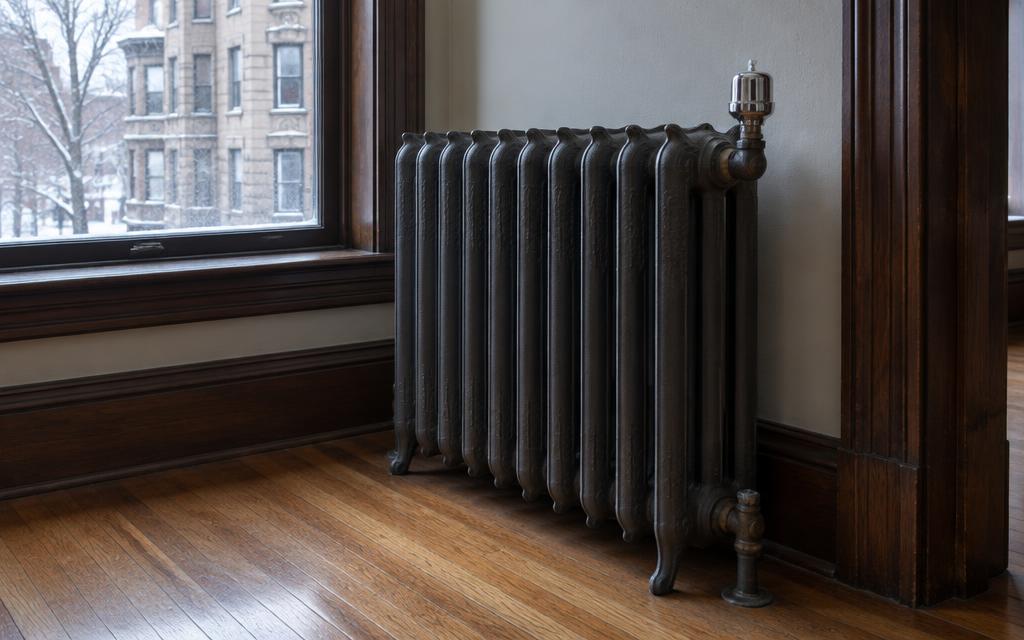
Steam heat is still common in Chicago two-flats, greystones, courtyard buildings and some older suburban homes. When it is set up right it is quiet, even and very durable. When it is not, the building tells you: pipes that bang like someone is hitting them with a hammer, radiators that hiss and spit, and a top-floor unit with open windows while the garden unit wears sweaters.
This guide covers those two complaints — noise and uneven heat — for owners and managers of steam-heated buildings. If your radiators are simply cold while the boiler runs, or you have a hot-water system rather than steam, our separate guides on those problems are a better starting point, and they are linked below.
Make sure it is actually steam
A steam boiler has a glass sight tube showing the water level on the side of the boiler and a pressure gauge that reads in very low numbers, often under 2 psi. Steam radiators usually have one pipe with a small vent on the opposite end, or two pipes with a trap.
A hot-water boiler runs at a higher pressure, has a circulator pump and an expansion tank, and its radiators have a bleed key instead of a vent that hisses.
For planned care rather than an active fault, review boiler maintenance in Chicago and report leaks or recurring shutdowns when booking.
If replacement is being considered after diagnosis, see what affects boiler replacement cost in Chicago before comparing written scopes; no single price fits every system.
For business or managed-building equipment, see commercial boiler repair in Chicago.
If the radiators are cold rather than noisy, start with what to check when the boiler runs but radiators stay cold.
Hot-water systems with a climbing gauge have their own guide: why boiler pressure rises and the relief valve drips.
Why steam pipes bang
The banging is called water hammer. Steam cools as it travels, turns back into water and has to drain back to the boiler. If that condensate collects in a sagging pipe or a radiator that is tipped the wrong way, the next rush of steam slams into it. The sound is loudest early in the cycle and on the first cold mornings of the season, when every pipe starts cold.
The common causes are ordinary: a one-pipe radiator that has settled and now pitches away from its valve, a supply valve on a one-pipe radiator left half open, a main that has sagged between hangers, a boiler water level set too high, or a boiler firing too hard for the piping. Old buildings that have been renovated sometimes have pipes rerouted without the right pitch, and those spots bang every day.
- One-pipe radiator valves should be fully open or fully closed, never partly open
- A radiator can be shimmed so it pitches back toward its supply valve
- Banging from the basement mains usually means a pitch, vent or water-level problem
- Banging that started after a renovation often points to rerouted piping
Why some radiators overheat while others stay cool
Steam can only fill a radiator once the air inside is pushed out through the vents. Main vents in the basement let the steam reach every radiator branch at about the same time; radiator vents then control how fast each radiator fills. When main vents are missing, stuck or undersized, the radiators closest to the boiler heat first and the far ones get steam late or not at all before the thermostat is satisfied.
A radiator vent that is painted over, clogged with mineral deposits or the wrong size for its location causes the same problem one room at a time. On the other side, a building where pressure has been turned up to push heat to the far units usually makes the balance worse, not better, and adds noise and fuel use.
What an owner can safely check
With the system cool, check that one-pipe radiator valves are fully open and that each radiator tilts slightly toward its valve. Look at the sight glass: the water should be visible roughly in the middle of the glass, not full and not empty. Walk the building during a cycle and note which radiators get hot first and which ones lag. That record is useful for whoever services the system.
Do not raise the pressure setting to fix a cold unit, and do not remove or cap vents. If the sight glass is empty, the boiler shuts off on low water, a pipe leaks or spits water, or you smell gas, turn the boiler off and call for steam boiler repair.
What a steam boiler service visit looks at
A proper steam diagnosis covers the boiler and the piping together: water level and low-water cutoff operation, the pressure control setting, the main vents and radiator vents, the pitch of the mains and runouts, and the condition of the water in the boiler. Dirty or oily boiler water can bounce and surge, which also causes banging and wet steam.
Most of these problems are repairable. Replacing main vents, correcting pitch, resetting the pressure control and cleaning the boiler water often improve balance and noise without touching the boiler itself. When the boiler is at the end of its life, replacement is sized to the connected radiation in the building, not simply matched to the old nameplate.
See our steam, hot-water and gas boiler repair service for diagnosis in homes and smaller commercial buildings.
If replacement is on the table, read about boiler installation and replacement. A properly sized modern boiler may reduce energy use; actual savings vary by building and usage.
Mixed-use and small commercial steam buildings
Storefronts with apartments above and small offices in older buildings often share one steam boiler across tenants. There, uneven heat becomes a tenant complaint problem quickly. Work on vents, controls and piping can usually be scheduled around business hours so the building is not left without heat during occupied periods.
Buildings with rooftop units, unit heaters or larger boilers are covered on our commercial heating repair page.
Coverage details are on our Chicago service area page, along with all
Frequently asked questions
Why do my steam pipes bang when the heat comes on?
Usually condensate is trapped in a pipe or radiator that is not pitched to drain, and incoming steam slams into it. Partly open one-pipe radiator valves, sagging mains, a high boiler water level and dirty boiler water are the common causes.
Why is one apartment too hot and another too cold on steam heat?
Steam reaches radiators in the order air can escape. Missing or stuck main vents and clogged or mismatched radiator vents let units near the boiler heat first while distant units lag behind. Turning up the pressure rarely fixes it.
Should I partly close a steam radiator valve to lower the heat?
Not on a one-pipe system. A half-open valve traps condensate and causes banging and spitting. Leave it fully open or fully closed, and ask about a different radiator vent to control heat output.
Is banging steam heat dangerous?
Water hammer is not usually an immediate hazard, but over time it can loosen fittings and damage piping. Turn the boiler off and call if the sight glass is empty, the boiler shuts down on low water, a pipe leaks, or you smell gas.
Who repairs steam boilers in Chicago and the suburbs?
Right Away Plumbing & HVAC, 2093 Rand Rd, Des Plaines, IL 60016, services steam and hot-water boilers. Call 773-250-6060 for Chicago or 847-550-3322 for Des Plaines and the suburbs.
Talk to Right Away
Banging pipes and uneven radiators are among the most fixable heating complaints in an older building. The fix is usually in the vents, pitch and water level rather than a new boiler.
Right Away Plumbing & HVAC is based at 2093 Rand Rd, Des Plaines, IL 60016. Chicago customers can call 773-250-6060; Des Plaines and suburban customers can call 847-550-3322.
You can read more about our plumbing services, check the communities we serve, or start with plumbing in Des Plaines and Park Ridge. Planning a remodel or weighing a big replacement? Our consulting service is built for that conversation.
Service areas for this work include Chicago and Hyde Park and Park Ridge. Questions about your building? Use our contact page.