
Sump Pump Life Expectancy: How Long Should a Sump Pump Last in Chicagoland?
· 7 min read · Right Away Plumbing and HVAC
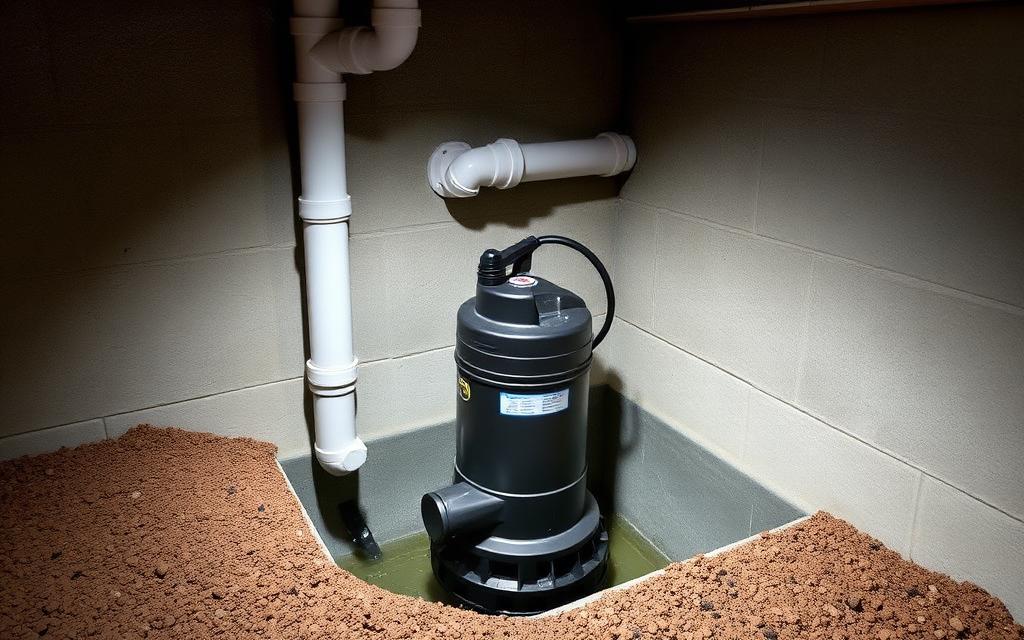
A sump pump is one of the least glamorous pieces of equipment in a house and one of the most important. It sits in a pit in the lowest part of the basement or crawl space, waits for groundwater to rise, and pumps that water back outside. When it works, nobody thinks about it. When it fails during a heavy Chicagoland storm, the basement floor is usually how you find out.
The most common question we get about them is simple: how long should a sump pump last? Below is a practical answer, along with the testing, maintenance and replacement guidance we give homeowners in Des Plaines and the surrounding suburbs.
How long a sump pump typically lasts
As a general planning number, a residential sump pump lasts roughly 7 to 10 years. Some cheap units give out in 3 or 4 years, and some well-built cast-iron pumps in a dry pit keep going past 12. The spread is wide because life expectancy has less to do with the calendar than with how many times the pump has started and stopped.
That is the useful way to think about it. A pump in a house with a high water table that cycles several times an hour during a wet spring is doing far more work than one in a dry basement that runs a few times a year. Two identical pumps installed the same day can be years apart in remaining life.
- Pedestal pumps: often 10 or more years, motor sits above the pit and stays cooler and drier
- Submersible pumps: commonly 7 to 10 years, quieter and better for finished basements
- Battery backup pumps: pump body can last years, but the battery itself is a 3 to 5 year part
- Combination primary and backup systems: replace as a system, since both halves age together
What actually shortens sump pump life
Discharge freeze-up deserves special mention here. Around Des Plaines, Park Ridge and Mount Prospect, a discharge line that terminates too close to grade can ice over in January, and the pump then runs against a blocked pipe until it overheats. That single detail ends more pumps early than any other in our experience.
- Short cycling caused by a pit that is too small or a float set too tightly
- Grit, sand and silt in the pit, which wears the impeller and seals
- A missing or broken pit lid that lets debris and dust fall in
- A check valve that has failed, so water drains back into the pit and the pump runs again
- A discharge line that is undersized, kinked, or freezes at the outlet in winter
- A float switch tangled against the pit wall or the pump body
- Running the pump on an extension cord or a circuit shared with other loads
- Sizing a lightweight pump for a house that has real groundwater
Warning signs your sump pump is near the end
One symptom to treat seriously: a pump that is dead silent through a soaking rain. If you cannot recall hearing it run in a wet week, test it rather than assume you have a dry basement.
- It runs constantly, or keeps running after the pit is empty
- It cycles on and off rapidly in short bursts
- Grinding, rattling or a loud hum instead of the usual startup and steady flow
- Visible rust, scale or a heavy mineral crust on the pump body
- The pump vibrates hard enough to walk itself across the bottom of the pit
- Water backs up in the pit before the pump reacts, meaning the float is late or sticking
- The breaker or GFCI trips when the pump starts
- It is more than 7 years old and has never been serviced
How to test a sump pump yourself
Testing takes about five minutes and is worth doing twice a year, ideally in early spring before the wet season and again in the fall.
- Confirm the pump is plugged directly into a working outlet and that the cord is not damaged
- Lift the pit lid and look for sludge, gravel or debris around the intake screen
- Pour several gallons of clean water into the pit, enough to raise the float
- Listen for the pump to start on its own, watch the water level drop, and confirm it shuts off
- Go outside and verify water is actually leaving the discharge point
- Lift the float by hand only if pouring water is not practical, and never leave it propped up
What a failed test looks like
- Nothing happens when the float rises
- The motor hums but no water moves, which usually means a jammed or worn impeller
- Water leaves the pit and then flows straight back in, pointing at the check valve
- The pump runs but no water reaches the outside discharge point
Maintenance that adds years
- Clean the pit of sediment and debris once a year
- Rinse the intake screen so it is not partly blocked
- Check that the float moves freely through its full travel
- Confirm the check valve holds and the discharge pipe is well supported
- Keep a proper sealed lid on the pit
- Test the GFCI outlet and keep the pump on a dedicated circuit
- Verify the outside discharge point is clear of mulch, leaves, snow and ice
Battery backup: worth it in this climate
Storms that push groundwater up are the same storms that knock power out. A primary pump on house power has no way to protect a basement during an outage, which is why we recommend a battery backup pump for most Chicagoland basements that hold anything of value.
A backup system uses a second pump on its own float, powered by a deep-cycle battery and a charger. It is not meant to run for days. It is meant to cover the hours between an outage and the power coming back. Plan on replacing the battery every 3 to 5 years, and test the backup at least once a year rather than trusting the indicator light.
Water-powered backup pumps are an alternative in homes with municipal water and adequate pressure, since they need no battery at all. They are not right for every property, and local code and cross-connection requirements matter, so this is a good thing to ask about before buying equipment.
Repair or replace?
Repair usually makes sense when the pump itself is sound and the problem is around it: a stuck float, a bad check valve, a clogged intake, a frozen or disconnected discharge line, or a dedicated circuit that needs attention.
Replacement is normally the better decision when the pump is at or past the 7 to 10 year mark, when the motor has already failed once, when the impeller is worn, or when the pump is clearly undersized for how much water the pit takes on. Sump pumps are relatively inexpensive compared to a finished basement, and a repair that buys six months on a decade-old pump is rarely a good trade.
If a pit is cycling constantly no matter what pump goes in, the real answer may be a larger pit, a properly sized pump, or drainage work outside. That is worth evaluating before spending money twice.
For the full picture on diagnosis, replacement and battery-backup options, see our sump pump installation and repair page.
Looking past the pump: basement flood-prevention consulting
A sump pump is one part of how a basement stays dry. Around Des Plaines and across Chicagoland, the flooding risk that matters is groundwater and storm runoff pushing in during a soaking rain or a rapid snowmelt, not the pump by itself. If you are replacing an aging pump or chasing repeat flooding, it is worth reviewing the whole setup rather than swapping one part and hoping.
No system can guarantee a basement never sees water in every possible storm, but a properly planned setup substantially lowers the risk. A flood-prevention review looks at how each piece works together.
Right Away installs backup pump system options designed for better reliability, efficient operation, and longer service life, including backup sump pumps, battery backup, and high-water alarms matched to how your basement actually takes on water.
Lifetime Parts & Labor Warranty on Qualifying Installations. Terms and eligibility apply. Coverage applies to qualifying company-supplied Right Away sump pump and ejector pump installations, including fittings we install, under the written warranty terms; a pump is not automatically covered unless the installation qualifies.
- Sump pump sizing, so the pump is matched to how much water the pit actually takes on
- A backup sump pump on its own float, so a second pump takes over if the primary fails or cannot keep up
- Battery backup to keep pumping through the power outages that come with the same storms
- High-water alarms and monitoring, so you are warned before water reaches the floor
- Discharge routing, including where the water exits, how far from the foundation, and whether the line can freeze in winter
- The pit, lid, check valve and inlet conditions that decide whether a good pump runs well
- Ejector-related concerns if the home also has a below-grade bathroom or laundry, since those basins protect against a different kind of backup
If you want a second set of eyes on whether your basement is set up for the next big storm, Right Away offers basement flood-prevention consulting that reviews sump pump sizing, backup options, alarms and discharge routing together.
You can also learn about our broader plumbing and sump pump consulting in Chicagoland.
Talk to Right Away
If your sump pump is approaching ten years old, has never been tested, or ran hard during the last storm, have it looked at before the next one. Right Away Plumbing and HVAC inspects, services and replaces sump pumps and battery backup systems for homes across Des Plaines and Chicagoland.
You can read more about our plumbing services, check the communities we serve, or start with plumbing in Des Plaines and Park Ridge. Planning a remodel or weighing a big replacement? Our consulting service is built for that conversation.