
Sump Pump Replacement Cost in Des Plaines: What Affects the Price
· 7 min read · Right Away Plumbing and HVAC
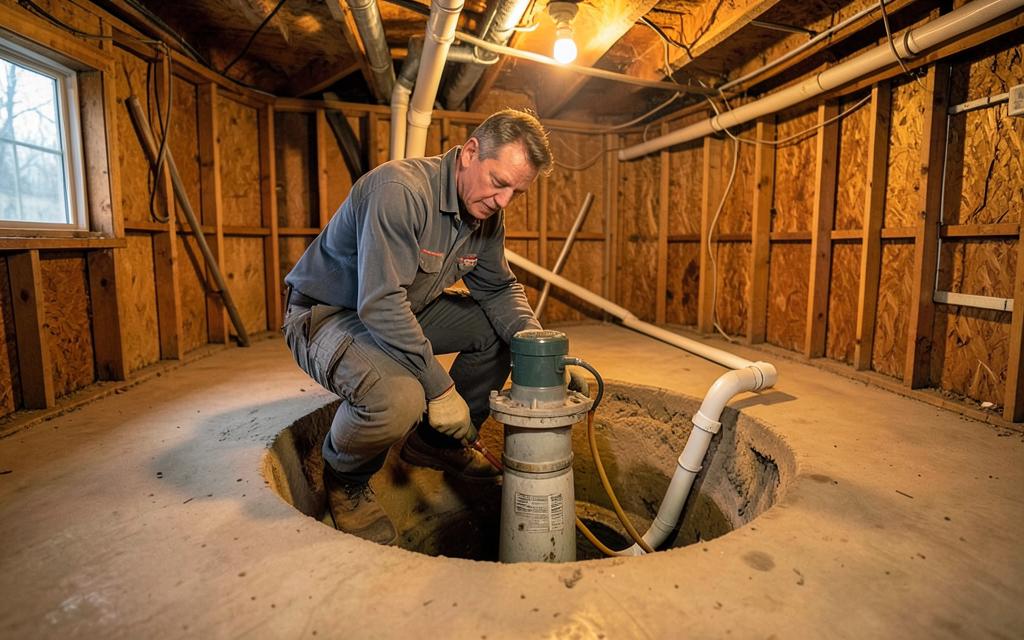
If your sump pump is getting old, getting loud, or just got tested by a heavy spring rain and barely kept up, the next question is usually money: what does replacing it actually cost? The honest answer is that there is a real range, and it is wider than most homeowners expect — because the pump itself is only part of the job.
Below is how we think about sump pump replacement cost for homes in Des Plaines and the surrounding northwest suburbs: the typical price ranges, the factors that move a job up or down within those ranges, and how to decide when replacement makes more sense than another repair.
Typical sump pump replacement cost ranges
For a straightforward like-for-like swap — a new primary pump into an existing pit with sound plumbing and wiring — most Des Plaines-area homeowners are looking at a few hundred dollars for the equipment plus labor. That is the low end of the range, and it applies when everything around the pump is already in good shape.
Costs climb from there as the job gets more involved. Upgrading from a basic pedestal pump to a quality submersible unit, adding a battery backup system, correcting a pit that is too small or deteriorating, or rerouting a discharge line that dumps water against the foundation each adds to the total.
A full replacement with a battery backup and pit work typically lands meaningfully higher than the simple swap — often into the low four figures depending on the equipment chosen. The only number that actually matters is the one for your basement, which is why we assess the whole setup before quoting.
What affects the cost
- Pump type and quality — a quality submersible pump costs more than a basic pedestal unit but runs quieter, lasts longer and handles heavy spring rain volume better
- Pit condition and size — older Des Plaines and Park Ridge homes often have undersized, cracked or gravel-floored pits that need correcting before a new pump can do its job
- Battery backup — adding one raises the upfront cost but keeps the pump running during the storm-related power outages that cause most basement floods
- Discharge line routing — if the existing line discharges too close to the foundation, freezes in winter, or is undersized, correcting it adds labor
- Check valve and fittings — a worn or missing check valve lets water cycle back into the pit and should be replaced with the pump
- Access and electrical — a pit in a finished corner or a missing dedicated outlet adds work compared to an open, properly wired utility area
Why the pit matters as much as the pump
In the older housing stock around Des Plaines, Mount Prospect and Arlington Heights, we regularly find pits that were installed decades ago and never revisited. A pit that is too small short-cycles the pump — it runs constantly in short bursts during a storm, which wears it out years early. A pit with a deteriorating floor lets the pump pull silt and gravel, which chews up the impeller.
Replacing a pump into a failing pit is money spent on the wrong half of the problem. When we quote a replacement, we look at the pit, the discharge, the check valve and the electrical at the same time, because a quote that ignores them is a quote that grows later.
When replacement makes more sense than repair
Repairs make sense on a younger pump with a single, identifiable fault — a stuck float switch, a failed check valve, a clogged intake. Once a primary pump is past the seven-to-ten-year mark, or it has needed more than one repair, the math usually flips. The cost of a service call plus parts on an aging pump starts to approach the cost of a new unit with a full service life ahead of it.
The other trigger is performance, not age. If your pump ran nonstop through the last heavy rain and the water level in the pit still climbed, the pump is undersized for your home's groundwater load — no repair fixes that. The same applies to a pump that has no battery backup in a neighborhood that loses power during storms. In both cases, replacement is not spending more; it is finally solving the problem.
Getting an accurate quote for your home
Every sump pump replacement we quote in Des Plaines and the northwest suburbs starts with a look at the actual installation: the pit, the pump, the discharge route, the check valve and the power supply. That is how you get a firm number instead of a range that grows on installation day, and how you find out whether your setup is ready for the next heavy spring rain or just the last light one.
For the complete service overview, including primary and backup testing, see our sump pump installation and repair page.
Weighing a replacement as part of a bigger basement plan? Our consulting service reviews the whole flood-prevention setup — pump, pit, backup and drainage — before you spend on any single piece.
Frequently asked questions
How much does sump pump replacement cost in Des Plaines?
A straightforward like-for-like swap typically runs a few hundred dollars plus labor. Adding a battery backup, correcting an undersized or deteriorated pit, or rerouting the discharge line raises the total, and a full replacement with backup and pit work often reaches the low four figures. An on-site assessment is the only way to get a firm number for your home.
Is it worth repairing an old sump pump instead of replacing it?
Repairs make sense on a younger pump with one clear fault, like a stuck float or failed check valve. Once a pump is past seven to ten years old or needs repeated repairs, replacement usually costs less over time than continued service calls on a unit near the end of its life.
Do I really need a battery backup sump pump?
In the Chicago area, the storms that load a sump pump hardest are the same storms that knock out power. A primary pump without a backup protects you only while the electricity is on, which is why we recommend a battery backup for any basement that would be damaged by flooding.
How long does sump pump replacement take?
A like-for-like swap usually takes a few hours. Jobs that include pit correction, discharge rerouting or adding a battery backup take longer, but most replacements are still completed in a single visit.
How often should a sump pump be replaced?
Most quality primary pumps last seven to ten years with normal use. Heavy spring rain seasons and short-cycling from an undersized pit shorten that. If your pump is in that age range, testing it before storm season tells you whether it still has life in it.
Can I replace a sump pump myself?
A simple swap is within reach of a handy homeowner, but the details that decide whether the pump protects you in a real storm — pit sizing, check valve orientation, discharge routing and backup power — are where DIY jobs most often fall short. A professional install also gives you someone to call if the first big storm exposes a problem.
Talk to Right Away
Right Away Plumbing and HVAC replaces, installs and services sump pumps and battery backup systems across Des Plaines, Park Ridge, Mount Prospect, Arlington Heights and the surrounding northwest suburbs. We will look at your pump, pit and discharge setup and give you a firm quote before any work starts.
You can read more about our plumbing services, check the communities we serve, or start with plumbing in Des Plaines and Park Ridge. Planning a remodel or weighing a big replacement? Our consulting service is built for that conversation.