
When Should You Shut Off Water Before a Chicago Freeze?
· 8 min read · Right Away Plumbing and HVAC
When a Chicago-area freeze is forecast, shutting off the water can sound like the safest possible response. Sometimes it is. A vacant building, a seasonal property or a structure with a known vulnerable line may benefit from a planned shutoff and proper winterization. An occupied, heated building usually needs a different approach: keep the heat operating, protect exposed piping and leave the plumbing system in normal service unless a specific risk calls for isolation.
Closing one valve does not make every pipe safe. Water remains trapped in branches, appliance connections and low sections unless the system is drained correctly. This guide helps homeowners, landlords and commercial managers choose between normal operation, isolation and winterization.
When a full-building water shutoff is appropriate
A planned full-building shutoff makes the most sense when a property will be vacant through a period of severe cold and nobody can reliably monitor the heat. It may also be appropriate when the heating system is not operating, when utilities are being turned off, when a known exposed line cannot be corrected before the freeze, or when a leak has already started. In those cases, stopping the incoming supply limits how much water can escape if a pipe splits.
Landlords and commercial managers should first identify water-fed heating, fire-protection and process equipment. A building with sprinklers or a boiler should not be shut down casually; follow the property requirements before isolating anything.
For a broader building review before a shutdown or renovation, see our plumbing and HVAC consulting service.
Buyers and property managers can also schedule a documented plumbing and mechanical inspection.
When keeping the heat and water operating is usually better
For an occupied home with dependable heat, keep both heat and water operating. Protect the coldest part of the building, not just the room with the thermostat. Open sink cabinets where piping sits against an exterior wall, keep garage doors closed near water lines and correct obvious drafts.
Our plumbing services cover pipe, valve and supply-line concerns throughout the building.
Vacant properties, hose connections and unheated spaces
Vacant properties carry the highest risk because a furnace failure or split pipe can go unnoticed. Keep heat operating unless the property is professionally winterized, use temperature monitoring when practical and arrange inspections during prolonged cold.
Disconnect garden hoses before freezing weather. Where a dedicated interior shutoff serves an exterior hose connection, close it and drain the exterior section according to the valve and fixture design. Do not assume a frost-resistant sillcock can protect itself while a hose remains attached; trapped water can defeat the drain-back design.
The dedicated frozen and burst pipe repair page covers warning signs and direct repair service without replacing preventive winterization planning.
Locate and test the main shutoff before cold weather
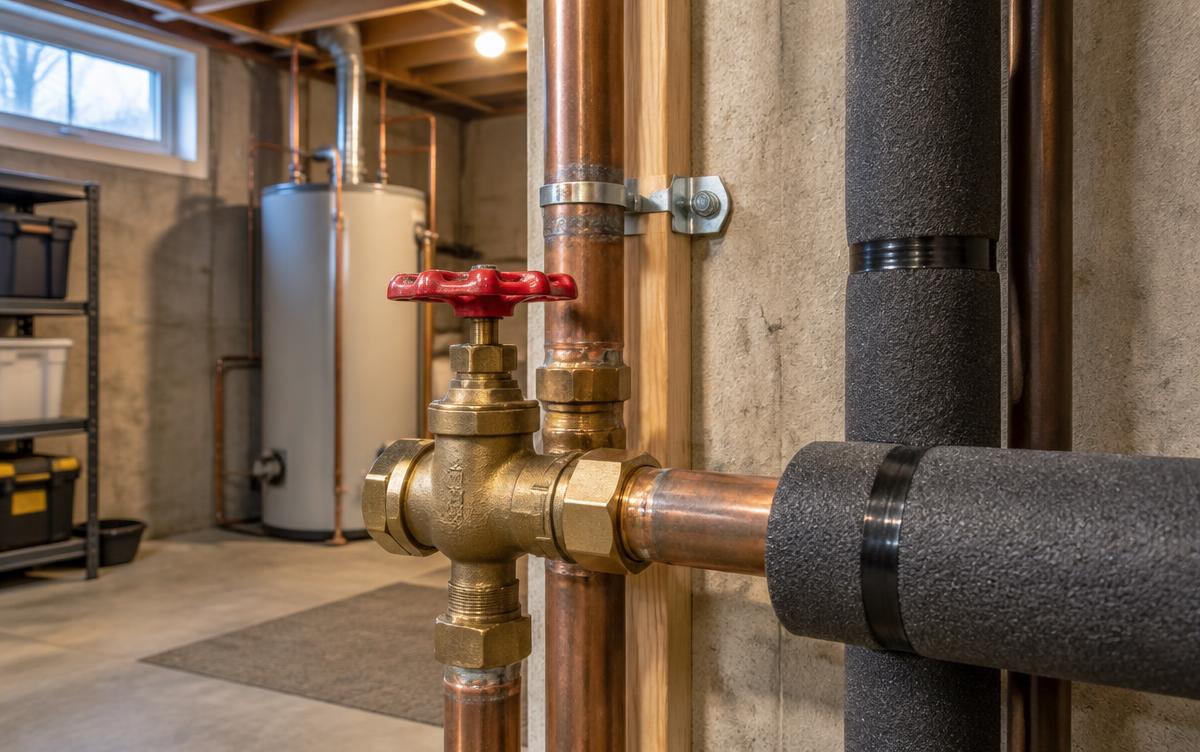
Find the accessible main water shutoff while the building is dry and calm. In many basements it is near the water meter or where the service enters the foundation. Other properties place it in a utility room, crawl area or interior closet. Make sure everyone responsible for the property knows the location and can reach it without moving stored items.
Inspect the valve for corrosion, leakage or a missing handle. If it appears serviceable, turn it gently toward closed, confirm flow stops at a nearby faucet, then return it fully to normal. Never force a seized valve; an uncertain or badly corroded shutoff should be evaluated before an emergency.
Why shutting off water does not drain every pipe
Closing the main stops new water from entering, but the plumbing system remains full. Water can stay trapped in horizontal branches, low spots, fixture supplies, outdoor lines, water heaters, softeners, filters, pumps and appliance hoses. A closed valve may therefore reduce the volume of a leak without preventing freeze expansion inside a trapped section.
Proper draining requires air to enter at high points and water to leave through suitable low points. Some systems need appliance-specific steps or isolation of equipment that should not be drained casually. Boiler loops and fire-sprinkler piping have separate requirements. Turning off the main and opening one faucet is not full winterization.
When professional winterization is the right choice
Professional winterization is appropriate for a vacant home, a seasonal building, a property awaiting renovation, or any structure where heat will not remain reliable. It is also useful when the piping layout is complex, when exterior or process lines need separate isolation, or when the person responsible cannot verify that every branch and appliance has been protected.
For local building conditions and phone guidance, see our Chicago service area or our home-base coverage in
What to do when water flow stops
If one fixture produces little or no water during a freeze, leave the affected faucet open slightly and check whether other fixtures still work. That pattern helps identify whether the frozen area is one branch or a larger supply. Look for frost, swelling, water stains or damp building materials, but do not cut into a wall or force a valve based only on a guess.
Never use a torch, open flame or high-temperature device to thaw a pipe. Fire can spread inside a wall, plastic and soldered joints can be damaged, and rapid heating can create pressure around an ice blockage. If the affected section is concealed, near electrical equipment, visibly damaged or inaccessible, leave it alone and request professional diagnosis.
When to call for frozen or burst-pipe repair
Call when water flow has stopped and the frozen section cannot be safely identified, when a pipe looks swollen or cracked, when water appears after thawing begins, or when the shutoff will not operate. A repeated freeze in the same location also deserves diagnosis even if the pipe did not split this time, because the exposure remains.
See urgent plumbing help in Des Plaines for immediate damage-control guidance.
Not sure whether your location is covered? Review all service areas or use the
Frequently asked questions
Should I shut off the whole building before every freeze?
Usually not for an occupied building with reliable heat. Keep the heat operating and protect known vulnerable lines. A full shutoff is more appropriate for a vacant property, a heating failure, a known exposure that cannot be corrected in time, or an active leak.
Does shutting off the main water valve prevent pipes from freezing?
No. It limits incoming water and may reduce damage if a pipe splits, but water remains trapped throughout the system unless each branch and connected device is drained correctly.
Should I drain a vacant Chicago-area property myself?
Simple exterior connections may have clear owner instructions, but a whole building can include low spots, water heaters, pumps, treatment equipment, boilers or sprinkler systems. Professional winterization is appropriate when the layout is complex or heat will be off.
What should I do if one faucet stops flowing during a freeze?
Check whether other fixtures still have water, leave the affected faucet slightly open and look for visible frost, swelling or leakage. Never use a torch or open flame. Request professional diagnosis if the frozen section is concealed, damaged or inaccessible.
Can a frozen pipe leak only after temperatures rise?
Yes. Ice can temporarily seal a split. Water may begin escaping when the blockage thaws and pressure returns, so monitor the area and know how to close the accessible main shutoff.
Who should I call for frozen or burst-pipe help?
Call Right Away Plumbing & HVAC at 773-250-6060 for Chicago properties or 847-550-3322 for Des Plaines and surrounding suburbs. The company is licensed, bonded and insured.
Talk to Right Away
Before a Chicago-area freeze, decide whether your property needs normal heated operation, isolation of one vulnerable branch or complete professional winterization. Do not wait until a valve is needed to learn where it is or whether it works.
Right Away Plumbing & HVAC is based at 2093 Rand Rd, Des Plaines, IL 60016 and is licensed, bonded and insured. Chicago customers can call 773-250-6060. Des Plaines and suburban customers can call 847-550-3322.
You can read more about our plumbing services, check the communities we serve, or start with plumbing in Des Plaines and Park Ridge. Planning a remodel or weighing a big replacement? Our consulting service is built for that conversation.
Service areas for this work include Chicago and Des Plaines. Questions about your building? Use our contact page.