
What Are the Signs You Need Sewer Line Repair in Chicago?
· 6 min read · Right Away Plumbing and HVAC
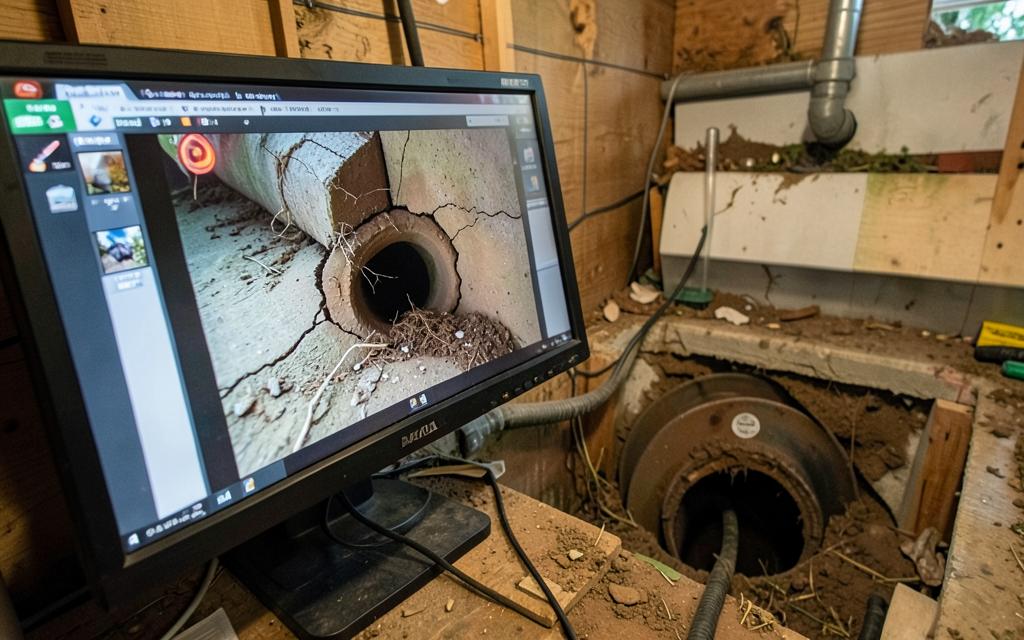
A blocked drain and a broken sewer line can look identical from inside the house. Both produce slow fixtures, both produce odor, and both clear temporarily after rodding. The difference is that a blockage stays cleared and a damaged line does not.
Chicago and the older inner suburbs have a lot of clay and cast-iron laterals still in service, often under parkway trees planted decades after the pipe went in. The symptoms below are the ones that push us from rodding toward inspecting the pipe itself.
Symptoms that point at the line, not the fixture
One symptom on its own can be a coincidence. Two or three together, especially the repeat-backup pattern, are worth a camera before spending money on another rodding.
- Backups that return within weeks or months after rodding
- More than one fixture affected at once — a toilet and a tub, or a floor drain and a laundry sink
- Gurgling from a toilet or tub when a different fixture drains
- Water appearing at the lowest fixture in the house first
- Sewer odor in the basement or in the yard along the run to the street
- A patch of grass over the sewer run that is greener, wetter or sunken
- Slow drainage that gets noticeably worse during and after heavy rain
What actually goes wrong with older Chicago laterals
Roots and bellies are the two that explain most repeat backups. Roots grow back after they are cut, and a belly refills after it is cleared, which is why both feel like the same clog returning.
- Root intrusion at clay joints, which is the most common failure we see
- Bellies — a sagging low spot where solids collect because the pipe no longer falls consistently
- Offset joints from soil movement and freeze-thaw cycles
- Cracked or crushed sections, especially cast iron that has corroded from the inside
- Scale buildup narrowing the usable diameter of an old cast-iron run
- Improper connections from past work, including downspouts tied into the sanitary line
How the diagnosis is actually made
A camera inspection puts the question to rest. The camera goes in through a cleanout and the line is watched end to end, so you can see whether the pipe has roots, a low spot, an offset or a crack, and where along the run it is. Distance readings mark the location so any repair is dug in the right place instead of exploratory trenching.
This is also how you find out that nothing is wrong with the pipe. Plenty of inspections end with grease and wipes in an otherwise sound line, which is a cleaning job and nothing more.
Cleaning and rodding are covered on our drain cleaning page; the camera work and repair methods are on the
sewer repair page.
Repair options once the problem is located
The right choice depends on what the camera shows, how the yard and driveway are laid out, and the village permit requirements. We walk through the tradeoffs before anything is dug.
- Rodding or cutting for roots, when the pipe itself is still sound — a maintenance approach, often repeated on a schedule
- Spot repair, when a single joint or short section has failed and the rest of the run is in good shape
- Trenchless lining or pipe bursting, where access and pipe condition allow, to avoid opening the whole yard
- Full replacement of the lateral, when the run has multiple failures, a serious belly or crushed sections
- A backwater valve, when the problem is the municipal system surcharging rather than your own line failing
What you can do in the meantime
- Keep wipes, grease and paper towels out of the drains, even the ones labeled flushable
- Know where your cleanout is so a camera does not need to be run through a toilet
- Note the date every time the line backs up — the interval tells us a lot
- During heavy rain, stop running laundry and dishwashers if fixtures start draining slowly
Storm-driven backups have their own pattern, described in sewer backup after heavy rain.
Frequently asked questions
How do I know if the problem is my line or the city's?
Timing and scope are the clues. A backup that only happens in heavy rain and affects neighbors too suggests the municipal system surcharging. A backup that happens in dry weather, in your house alone, points at your lateral. A camera inspection confirms it.
Does rodding damage an old clay pipe?
Done properly, rodding is routine maintenance on clay. The risk is on pipe that is already cracked or offset, which is another reason to camera a line that keeps backing up rather than rodding it repeatedly.
Is trenchless repair always cheaper than digging?
Not always. Trenchless avoids restoring a driveway or a mature landscape, which is where it usually wins. On a short run in open lawn with a single failed joint, a spot dig can be the more sensible choice.
How often should a sewer line be inspected?
For an older home with a clay lateral and mature trees, having it looked at every few years or before a major remodel is reasonable. If it has already backed up more than once, inspect it now rather than on a schedule.
Talk to Right Away
If your drains keep coming back to the same symptom, stop paying for the same cleaning and find out what the pipe looks like. Call 847-550-3322 in the suburbs or 773-250-6060 in Chicago and we will talk through what you are seeing first.
See our plumbing services, heating services, the communities we serve, or browse every guide on our blog. You can also request service online.
Call 773-250-6060