
Sewer Backup After Heavy Rain: Why It Happens in Chicagoland and How to Prevent It
· 8 min read · Right Away Plumbing and HVAC
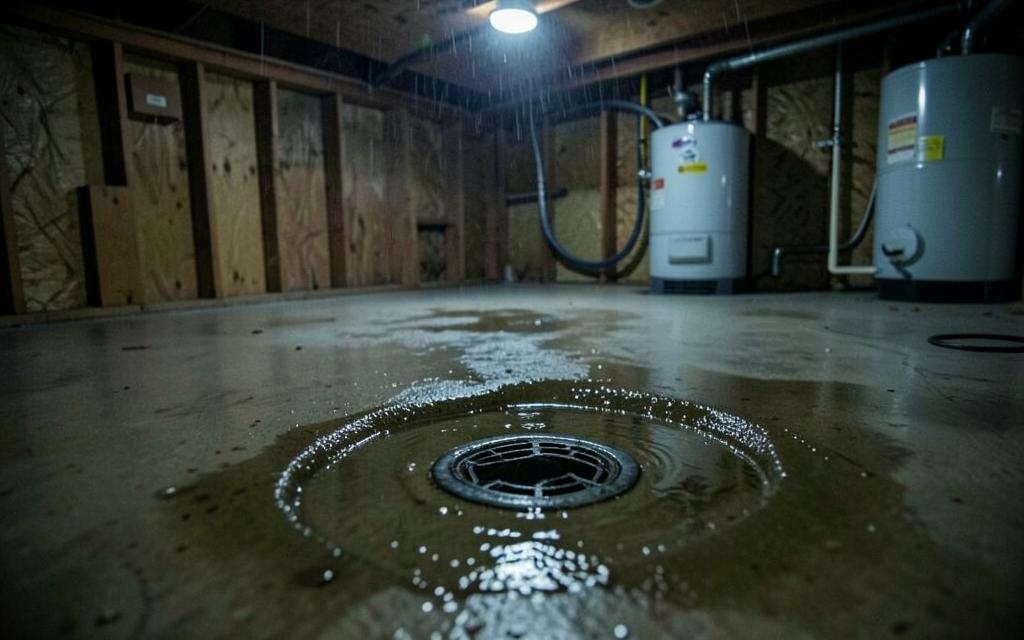
Every heavy Chicagoland rain, the calls follow the same pattern: water coming up through a basement floor drain, a basement toilet that will not flush, or a shower pan filling with water that smells like the sewer. This is not a sump pump problem and it is not an ejector pump problem. It is the sewer line itself — either yours or the municipal main — unable to move water as fast as the storm is delivering it.
The timing is not a coincidence. Storms are exactly when a root-damaged, bellied or deteriorated line gets pushed past its limit. Below is why that happens around Des Plaines and the older suburbs, how to read the warning signs, and what actually prevents the next backup rather than just cleaning up the last one.
Why heavy rain overwhelms sewers around Chicagoland
Much of Chicago and the older inner-ring suburbs run combined sewers, where stormwater and sanitary sewage share the same pipe. In dry weather there is plenty of capacity. In a fast, soaking rain, the main fills with storm runoff and the level in the pipe rises above the elevation of basement fixtures. At that point the physics is simple: water seeks the lowest opening, and that opening is often your floor drain.
Even in suburbs with separated storm and sanitary systems, the sanitary main still takes on extra water during a storm. Groundwater seeps into cracked pipes and leaky joints — engineers call this infiltration and inflow — and a main that handles normal flow easily can surcharge during a long rain. Homes at low points in the system feel it first.
Your own lateral is usually part of the story
The private sewer lateral — the pipe from your house to the main — is where most storm-related backups actually originate. Many Chicagoland homes still have clay tile laterals installed decades ago. Clay joints separate over time, tree roots grow into them, and sections settle and form bellies where water and solids sit instead of flowing.
In dry weather a root-matted or bellied line still passes water, just slowly. During a heavy rain the line has to carry normal household flow plus groundwater entering through every crack and open joint. That is when a marginal line becomes a blocked line, and the first fixture to flood is the lowest one in the house. If your basement backs up during storms but behaves the rest of the year, the lateral is the place to look.
Your line vs. a municipal surcharge: why the difference matters
If the backup comes from your own lateral, the fix is on your property: clear the roots, repair the damaged section, or replace the line. But if the municipal main itself is surcharging — the whole system is full during a big storm — even a brand-new lateral cannot help you. Water from the main can push backward into the house.
That is what a backwater valve is for. It is a one-way flapper installed on your building drain that lets sewage leave the house but closes when flow tries to come back in from the main. In neighborhoods with a history of storm surcharging, a properly installed backwater valve is the single most effective protection for a basement.
It requires maintenance and correct installation to work when it matters, and local code governs how it is fitted, so it is worth doing with a plumber who has installed them in your municipality before.
Warning signs before and during a storm
A sewer line rarely fails with no warning at all. The signs are usually there in the weeks before, and they get louder as rain moves in. Water backing up at the lowest fixture is the tell: when the lowest drain in the house is where water appears, the restriction is downstream of everything, in the building drain or the lateral — not in a single fixture's trap.
- Gurgling from toilets or drains when other fixtures run, especially during rain
- A floor drain that drains slowly or bubbles when the washing machine discharges
- Water appearing around a floor drain early in a storm, before the basement is otherwise wet
- Sewer odor from basement drains, which can mean a drying trap or a venting problem
- One low fixture — a basement shower, toilet or floor drain — backing up while upstairs fixtures still work
- Multiple fixtures draining slowly at the same time, which points to the main line rather than a single branch
- A backup that recurs during or after every heavy rain
What to do if sewage backs up during a storm
If backups during storms are recurring for you, note the timing and which fixtures were involved before they are cleaned up. That information shortens the diagnosis considerably.
- Stop running water anywhere in the house — every gallon you send down a drain has nowhere to go
- Do not flush toilets or run the washing machine or dishwasher until the line is cleared
- Shut off the water supply to a fixture that is actively overflowing, and keep people and pets away from the affected area
- Do not treat standing sewage as ordinary water — it needs proper cleanup and disinfection once the line is cleared
- Avoid chemical drain openers; they will not clear a main line and they make the water in your basement more hazardous
- Call for service once the worst of the storm has passed, and ask for a camera inspection rather than a blind rodding, so you find out why it happened
For an active backup that cannot wait for routine scheduling, contact an emergency plumber in Des Plaines and describe where the sewage is appearing. Keep away from standing water near electrical equipment.
Finding the cause: camera inspection, rodding or trenchless repair
A camera inspection is what separates a one-time fix from a recurring expense. The camera shows whether you are dealing with roots at a joint, a belly holding standing water, a cracked or collapsed clay section, or a line that is simply undersized for a house that has added bathrooms over the years. Rodding restores flow and is often the right first step, but if the camera shows structural damage, rodding is buying time rather than solving the problem.
For damaged laterals, trenchless options — lining or pipe bursting — can repair or replace the line without excavating the whole yard, though they are not right for every situation. A badly bellied line, for example, will not be fixed by a liner that follows the same sag. The honest sequence is camera first, then a real conversation about rodding versus spot repair versus trenchless, based on what the footage shows.
We cover both approaches in detail on our sewer repair and replacement page, including when rodding is enough and when it is not.
For recurring slow drains and root intrusion between storms, see our drain cleaning and rodding services.
What Changes the Cost of Fixing a Sewer Backup?
The cost of fixing a sewer backup depends on what actually caused the backup. Clearing a one-time obstruction is different from cutting recurring tree roots, repairing a collapsed section of sewer, correcting a belly in the line or replacing a damaged lateral. A proper diagnosis starts by reopening the line when necessary and then determining why the backup happened.
When the same sewer has backed up more than once, a camera inspection can help show whether the problem is roots, an offset joint, damaged pipe or another condition that cleaning alone will not correct.
In plain language: the price depends on whether you have a clog or a damaged sewer. A cleaning can restore flow, but if the pipe itself is broken or repeatedly filling with roots, the long-term repair is a different job.
Before approving sewer replacement, ask to see the camera findings and make sure the proposed repair matches the damaged section.
Review the diagnosis and repair options on our sewer repair page, including when a camera inspection changes the recommendation.
For recurring backups and the role of a camera, see our drain cleaning and camera inspection information.
Preventing the next one
Prevention comes down to knowing the condition of your lateral before a storm tests it. If your home is more than a few decades old and the line has never been scoped, one camera inspection tells you whether you are ahead of the problem or behind it. Homes with mature trees over the line, or a history of even minor storm backups, should treat that inspection as overdue.
For homes in surcharge-prone areas, a backwater valve plus a properly maintained lateral is the combination that actually protects the basement. And if you are planning a basement remodel or finishing project, evaluate the sewer line first — it is far cheaper to repair a lateral before the new flooring goes in.
If you are weighing a remodel, repeat flooding, or a line that needs a plan rather than another emergency call, Right Away offers plumbing and flood-prevention consulting that looks at the lateral, drainage and basement setup together.
Frequently asked questions
Why does my basement only back up during heavy rain?
Because that is when the system is pushed past its capacity. Rainwater enters the municipal main and your own lateral through cracks and joints, raising the water level until it reaches your lowest fixture. A lateral with root intrusion or a belly may handle normal flow fine and fail only under storm load — which is why the line condition, not just the storm, needs to be investigated.
Is a sewer backup the city's problem or mine?
It depends on where the problem is. You own the lateral from your house to the municipal main, so roots, cracks and bellies in that pipe are the homeowner's responsibility. If the municipal main itself is surcharging, the municipality owns the main — but the water entering your home is still prevented on your side, which is where a backwater valve comes in.
Will rodding the line stop storm backups?
Rodding restores flow and is often the right first response, but if the camera shows roots, a belly or a damaged clay section, the backup will return with the next heavy rain. Rodding without a camera inspection is guessing. Scope the line once, and the repair-or-maintain decision becomes straightforward.
What is a backwater valve and do I need one?
A backwater valve is a one-way device on your building drain that lets sewage leave the house but closes against flow coming back from a surcharged municipal main. If your neighborhood has a history of storm-related backups, or your basement sits below the elevation of the street sewer, it is one of the most effective protections available. It must be installed to code and maintained to work when it matters.
How much does it cost to fix a sewer line that backs up in storms?
It depends entirely on what the camera shows — clearing roots, a spot repair and a full trenchless replacement are very different jobs. That is why we start with the inspection and quote the actual options for your line rather than a generic number.
Talk to Right Away
If your basement has backed up during heavy rain — even once — the line is telling you something. Right Away Plumbing and HVAC performs camera inspections, rodding, sewer repair and trenchless replacement across Des Plaines and Chicagoland, and we would rather show you the footage than guess.
Reach the suburbs at 847-550-3322 and Chicago neighborhoods at 773-250-6060.
You can read more about our plumbing services, check the communities we serve, or start with plumbing in Des Plaines and Park Ridge. Planning a remodel or weighing a big replacement? Our consulting service is built for that conversation.