
What Causes a Sewer Line to Collapse?
· 6 min read · Right Away Plumbing and HVAC
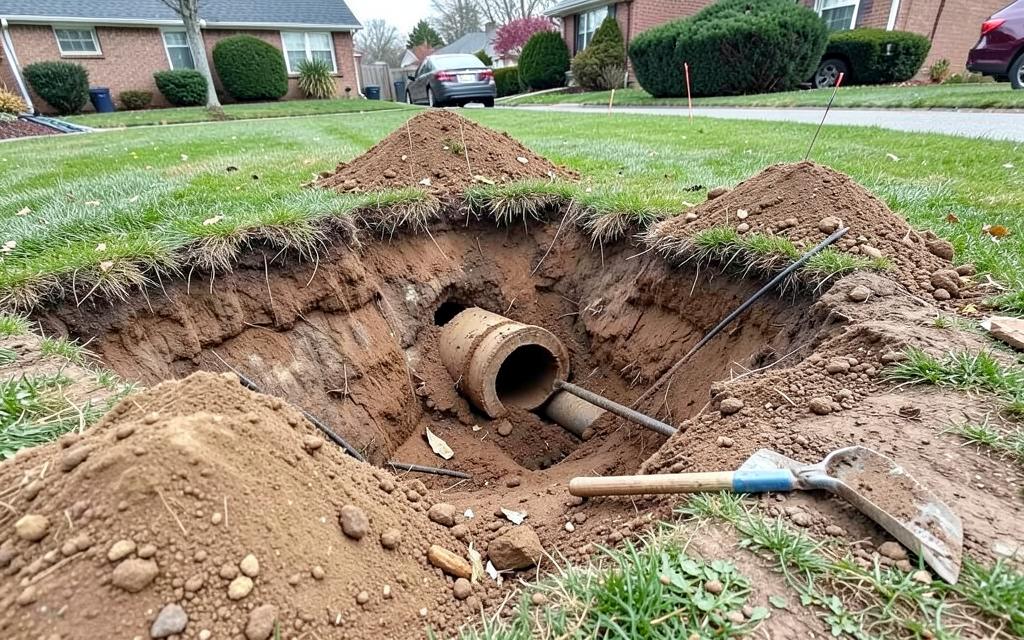
A collapsed sewer line sounds like a sudden event. In practice it is the last step in a slow process that started years earlier, usually with a joint that was already leaking and a tree that found it.
Knowing what causes the failure is useful because every cause has an earlier stage where the fix is much smaller.
The main causes we find
In older Chicago neighborhoods and the inner suburbs, the combination that shows up most often is a clay lateral with mature parkway trees above it. The roots are opportunistic; they follow moisture to a joint that has already started to weep.
- Age and material: vitrified clay and older cast iron were not built for a century of service and they fail at the joints first
- Root intrusion: roots enter at a leaking joint, expand, and eventually break the pipe apart from the inside
- Soil movement and freeze-thaw cycles that shift sections out of alignment
- Bellies, where a sagging section holds water and solids until the pipe is under constant load
- Corrosion in cast iron, which thins the pipe wall from the inside until it crushes
- Heavy surface loads: vehicles parked over a shallow run, or construction equipment during a project
- Poor original installation or previous repairs with mismatched materials and bad transitions
- Hydraulic shock during heavy rain when downspouts or drain tile were tied into the sanitary line
Warning signs before a full collapse
- Backups that keep returning after cleaning
- Multiple fixtures draining slowly at the same time
- Gurgling from a toilet or tub when another fixture runs
- Sewer odor indoors or over the sewer run outside
- A sunken or unusually green strip of lawn following the pipe route
- New cracks in a basement slab or foundation near the sewer run
- Rodents or insects appearing in the basement, which sometimes follow a broken line
These overlap with the earlier-stage symptoms covered in signs you need sewer line repair, which is the better place to start if nothing has failed yet.
How a collapse is confirmed
A camera inspection through a cleanout is the standard method. On a collapsed line the camera stops at the failure and the distance reading marks where it is, so the dig is targeted. If the line is fully blocked with debris, it may need to be cleared enough to get the camera through first.
Locating equipment traces the camera head from the surface, which is how the excavation footprint is kept small and how driveways, walks and mature landscaping are worked around.
Camera inspection, spot repair, trenchless options and full replacement are all described on our sewer repair page.
Repair options after a collapse
Village permits and inspections are part of this work in most Cook and DuPage communities, and the requirements differ from town to town. We handle that as part of the job rather than leaving it to the homeowner.
- Spot repair of the failed section when the rest of the run inspects clean
- Trenchless lining, where the host pipe is intact enough to accept a liner
- Pipe bursting to replace a run without opening the full length of the yard
- Open-cut replacement, which is sometimes the only option on a badly collapsed or deeply bellied line
- Adding a cleanout during the repair so future inspections are simple
Preventing the next one
- Camera the line before a major remodel or a kitchen and bath addition
- Address root intrusion on a schedule instead of waiting for the next backup
- Keep grease, wipes and paper towels out of the drains
- Do not park vehicles over a shallow lateral
- Consider a backwater valve if your neighborhood surcharges during heavy rain
Routine cleaning and rodding is on the drain cleaning page, and the full plumbing lineup is on our
plumbing services page.
Frequently asked questions
Can a sewer line collapse without any warning?
It is rare. Most collapses follow months or years of repeat backups, slow drains or odor. The warning is usually there; it is often read as a recurring clog.
Are tree roots always the cause?
No, but they are the most common contributor in older Chicagoland neighborhoods. Corrosion, bellies and soil movement cause plenty of failures on their own.
Does homeowners insurance cover a collapsed sewer line?
Coverage varies widely and often depends on the cause and on whether you carry a service line endorsement. Ask your carrier directly, and keep the camera footage and the inspection report.
How long does the repair take?
A spot repair on an accessible run is often a one-day job. A full replacement, or anything under a driveway or public walk, depends on permits, locates and restoration, so it is planned out over several days.
Talk to Right Away
If your line has already backed up more than once, get eyes in the pipe before it becomes an excavation. Call 847-550-3322 for the suburbs or 773-250-6060 in Chicago, and read more guides on our blog.
See our plumbing services, heating services, the communities we serve, or browse every guide on our blog. You can also request service online.
Call 847-550-3322