When Should You Call an Emergency Plumber in Chicago?
· 6 min read · Right Away Plumbing and HVAC
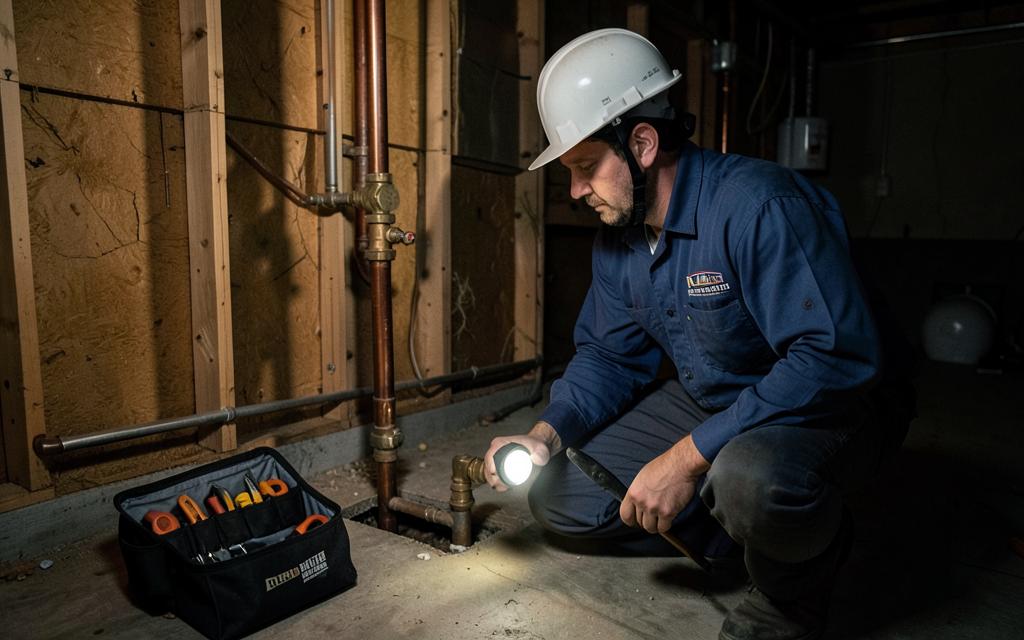
The hardest part of a plumbing problem is usually the first ten minutes, when you are standing in a basement trying to decide whether this needs someone tonight or whether it can wait until a normal appointment. Guess wrong in one direction and you pay for urgency you did not need. Guess wrong in the other and a slow leak becomes drywall, flooring and mold remediation.
For emergency burst pipe help in Chicago, call 773-250-6060 from a safe location. Same-day emergency plumbing may be available when the schedule allows; call to confirm an appointment. Below is the way we actually triage calls in Chicago and the northwest suburbs — what counts as urgent, what can safely wait, and what to do while you decide.
Problems that should not wait
The common thread is that the damage keeps growing every hour. If the volume of water, sewage or gas is increasing on its own, that is the definition of an emergency regardless of how small the pipe is.
- Water you cannot stop, from a burst pipe, a failed supply line or a split water heater tank
- Sewage backing up into a floor drain, tub or basement fixture
- A gas smell near a water heater, boiler or gas line — leave and call the utility first
- No water at all in the building, especially in freezing weather
- Water near an electrical panel, subpanel or furnace
- A water heater relief valve discharging steam or very hot water
Problems that can usually be scheduled
These are real problems and they do get worse, but they get worse over weeks, not hours. Scheduling them normally usually means better parts availability and a calmer conversation about options.
- A dripping faucet or a running toilet that still flushes
- One slow drain in a house where the other fixtures drain normally
- A water heater making noise but still producing hot water
- A small, contained drip from a trap that a bucket can hold overnight
- Low pressure at one fixture only
A single slow drain is often the first symptom of something further down the line. Our drain cleaning page explains what rodding does and when a camera is the better next step.
What to shut off before anyone arrives
Learn where the main shutoff is before you need it. In many Des Plaines and Chicago homes it is on the front wall of the basement near the meter, but on slab and garden-unit layouts it can be in a closet or utility room. Two minutes on a dry afternoon saves a flooded floor later.
- Fixture stop valve first — under the sink or behind the toilet — if the leak is at one fixture
- Main water shutoff if the source is a pipe, a water heater or something you cannot find
- Gas valve at the appliance only if you are certain which one it is and it is safe to reach
- Power to the water heater or to a circuit that water is reaching, at the breaker
- Stop using every fixture in the house if a sewer line is backing up, including washing machines
Chicago-area conditions that create real emergencies
A few local patterns show up over and over. Deep January cold splits pipes in uninsulated exterior walls and in unheated crawl spaces. Heavy rain surcharges older combined sewers, and the backup shows up at the lowest fixture in the house. Older clay laterals under mature parkway trees fail during exactly those storms, when the line is under the most load.
None of these are surprises, which is the useful part: each one has a maintenance answer that costs far less than the emergency it prevents.
For storm-driven backups specifically, we wrote a full guide on sewer backups after heavy rain, including how to tell a private line failure from a municipal surcharge.
If the line itself is damaged rather than blocked, see sewer repair for camera inspection, spot repair and trenchless options.
What to expect when you call us
Tell us what the water or sewage is doing, where it is coming from, and what you have already shut off. That decides which truck comes and which parts are on it. If the fix is straightforward we do it on the spot; if it needs a camera, an excavation permit or a replacement unit, we explain the options and the sequence before any work starts.
We do not use pressure tactics or invented deadlines. If the honest answer is that it can wait until Tuesday, that is what we will tell you.
Weighing a larger repair or a system replacement instead of another patch? Our consulting service is built for that conversation.
Frequently asked questions
Is a running toilet an emergency?
Almost never. Shut the stop valve behind the toilet to stop the water use and schedule a normal visit. It becomes urgent only if water is escaping the bowl onto the floor.
My water heater is leaking from the bottom. Can it wait?
Treat a tank leak as urgent. A tank that is weeping at the base is failing, and the failure mode is the full contents of the tank on the floor. Shut off the water supply to the heater and the power or gas to it, then call.
Sewage came up in my basement floor drain and then went down. Do I still need someone?
Yes. A backup that clears on its own usually means the line is partly blocked or the municipal system surcharged. A camera inspection tells you which, and that decides whether you need rodding, a repair or a backwater valve.
What number should I call?
Suburban Cook and DuPage addresses reach us at 847-550-3322. Inside Chicago, use 773-250-6060. Either way, describe the symptom first so the right truck and parts are dispatched.
Talk to Right Away
If you are not sure whether what you are looking at is urgent, call and describe it. Triage over the phone costs nothing and it is a much better use of ten minutes than searching for a second opinion while water is moving.
See our plumbing services, heating services, the communities we serve, or browse every guide on our blog. You can also request service online.
Call 773-250-6060