
Sump Pump Installation, Repair & Maintenance in Des Plaines & the Chicago Suburbs
· 6 min read · Right Away Plumbing and HVAC
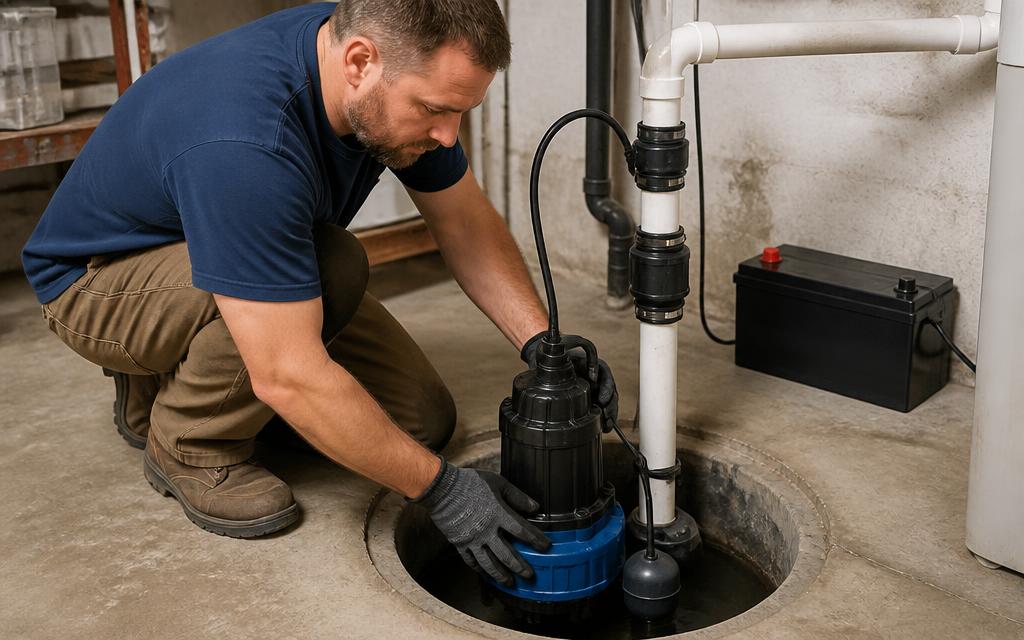
Chicago's heavy spring rains and melting snow put a lot of stress on basements every year, and a working sump pump is often the only thing standing between a dry basement and thousands of dollars in water damage. Right Away Plumbing & HVAC installs, repairs, and maintains sump pumps for homeowners throughout Des Plaines and the northwest Chicago suburbs.
Below is how we approach sump pump service for older Chicagoland homes: why the pump matters, the warning signs to watch for, and what our installation, battery backup, repair and maintenance services actually cover.
Why a reliable sump pump matters
A sump pump sits in a pit in your basement or crawlspace and automatically pumps out groundwater before it can rise and flood your home. Without one working properly, even a short power outage during a storm — or a pump that is simply worn out — can lead to a flooded basement and serious damage.
- Flooded basements and ruined flooring or drywall
- Damaged furnaces, water heaters, and stored belongings
- Mold and mildew growth from prolonged dampness
- Foundation damage from prolonged water exposure
Signs your sump pump needs attention
- Unusual noises, such as grinding, rattling, or humming without pumping water
- The pump runs constantly even without heavy rain
- The pump does not turn on during a storm
- Visible rust or corrosion on the unit
- The pump is more than 7 to 10 years old
Our sump pump services
Installation
We install new primary sump pumps sized correctly for your basement and water table conditions, including both pedestal and submersible models. Choosing the right pump for your home matters — a properly sized, quality sump pump typically lasts 7 to 10 years, while the wrong choice can fail well before that.
- Correct pump sizing matched to your basement's groundwater load
- Pedestal and submersible pump options
- Sound pit, check valve and discharge installation
Battery backup systems
Power outages often happen during the exact storms when you need your sump pump most. A battery backup system keeps your pump running even if the power goes out, so a single outage does not turn into a flooded basement.
Repair
Motor failures, float switch issues, clogged discharge lines, and check valve problems are common sump pump issues we diagnose and fix quickly. On a repair call we also check the pit, the discharge route and the electrical so a fix to one part does not miss a problem elsewhere.
Maintenance
Regular testing and cleaning keeps your pump ready to perform when a storm hits, rather than failing at the worst possible moment. We clean the pit, check the float and check valve, confirm the discharge is clear, and test both the primary pump and any backup.
Water-powered backup systems, and how they differ from a battery
A battery backup pump is the common answer to an outage, and it works well as long as the battery is healthy. Runtime depends on the battery, the pump and how hard the pit is working, so we size the system to the home rather than quoting a fixed number of hours. Batteries are consumables — they need testing and eventual replacement like any other battery.
A water-powered backup takes a different approach: it uses municipal water pressure to move water out of the pit, so there is nothing to charge or replace. It needs an adequate municipal supply and correct backflow protection, and it is not an option on a private well, so it suits some homes and not others. We will tell you plainly which one fits your setup instead of pushing one by default.
Why a pump runs when it has not rained, and other diagnostic clues
Short-cycling — the pump snapping on and off instead of running a full cycle — usually traces back to the float switch, a check valve letting discharged water fall straight back into the pit, or a pit that is simply too small for the volume. Constant running in dry weather normally means a high water table or groundwater arriving through the drain tile, though a stuck check valve produces the same symptom.
Water rising in the pit while the pump is clearly running points at the discharge side: a blocked line, a failed check valve, or in winter a discharge line that has frozen where it exits the house. Grinding or screeching, visible rust and heavy sediment are wear indicators rather than single faults.
These overlap enough that swapping in a new pump does not reliably fix them. We diagnose the pit, the float, the check valve and the discharge routing together, then tell you which part actually needs the work.
What skipping maintenance actually costs
We are not going to put a dollar figure on a flooded basement, because the range is enormous and depends on the home, the finishes and how long the water sat. What we can say is that the work is rarely limited to removing the water.
Standing water in a finished basement usually means carpet, pad, drywall and baseboard come out, along with anything stored on the floor. Moisture left in wall cavities can support mold growth, which adds a remediation step on top of the reconstruction, and repeated saturation against a foundation can contribute to water-intrusion problems over time.
None of that is meant as a scare tactic — plenty of basements go decades without an incident. The point is that an annual test and a working backup are small, predictable steps, and the test takes a technician very little time.
If storm water also comes up through floor drains, that is a different problem with a different fix — read about sewer backups after heavy rain.
Buying a home with a pump of unknown age? A plumbing and HVAC property inspection documents its condition before you commit.
Don't wait for a flooded basement
Sump pump failures tend to happen at the worst times — during the heaviest storms, when plumbers are busiest. Getting your system inspected or upgraded before storm season hits is the best way to avoid an emergency.
If your pump is past the 7 to 10 year mark, has never been tested, or ran hard during the last heavy rain, have it looked at before the next one. A quick inspection tells you whether the pump still has life in it or whether replacement is the safer call.
You can read more about our plumbing services across Des Plaines and Chicagoland, including drain cleaning and sewer repair.
For repeat flooding or a pump that cannot keep up, our basement flood-prevention consulting reviews the pump, pit, backup and discharge routing together before you spend on any single part.
Planning a replacement or weighing a bigger basement project? See our guide to sump pump replacement cost in Des Plaines for what drives the price up or down.
If a pump has already failed and water is rising in the basement, our emergency plumber Des Plaines page explains what we respond to and the fastest way to reach us.
Frequently asked questions
How long does a sump pump last?
Most quality residential sump pumps last about 7 to 10 years. A properly sized, well-maintained pump in a clean pit can last longer, while short-cycling, sediment and a frozen or blocked discharge line shorten that. If your pump is in that age range, testing it before storm season tells you where it stands.
Do I need a battery backup sump pump?
In the Chicago area, the storms that load a sump pump hardest are the same storms that knock out power. A primary pump on house power cannot protect a basement during an outage, so we recommend a battery backup for any basement that would be damaged by flooding.
What are the signs my sump pump is failing?
Grinding, rattling or humming without pumping water, running constantly with no rain, failing to turn on during a storm, visible rust or corrosion, and a pump past the 7 to 10 year mark are all signs it needs attention. If you cannot recall hearing it run during a wet week, test it rather than assuming your basement is dry.
Should I repair or replace my sump pump?
Repairs make sense on a younger pump with a single clear fault, such as a stuck float or failed check valve. Once a pump is past seven to ten years old or has needed repeated repairs, replacement usually costs less over time than continued service calls on a unit near the end of its life.
How often should a sump pump be serviced?
We recommend testing your pump twice a year — early spring before the wet season and again in the fall — and having the pit, float, check valve and discharge inspected professionally. Regular maintenance catches the small problems that turn into failures during the next heavy rain.
What is a water-powered backup sump pump?
It uses municipal water pressure instead of a battery, so there is no battery to charge or replace. It requires an adequate municipal supply and proper backflow protection, and it is not an option for homes on a private well. We will tell you whether your home is a candidate.
Why does my sump pump run when it has not rained?
Usually a high water table or groundwater arriving through the drain tile, though a stuck check valve that lets discharged water fall back into the pit produces the same symptom, as can a float that is not resetting. Constant running shortens pump life, so it is worth diagnosing rather than ignoring.
Talk to Right Away
Right Away Plumbing and HVAC installs, repairs and maintains sump pumps and battery backup systems for homes across Des Plaines, Park Ridge, Mount Prospect, Arlington Heights and the surrounding northwest suburbs. Call us at (847) 550-3322 to schedule sump pump installation, repair, or maintenance today.
You can read more about our plumbing services, check the communities we serve, or start with plumbing in Des Plaines and Park Ridge. Planning a remodel or weighing a big replacement? Our consulting service is built for that conversation.