How to Winterize Your Plumbing for a Chicago Winter
· 6 min read · Right Away Plumbing and HVAC
Frozen pipes are one of the few plumbing failures that are almost entirely preventable. The houses that get hit are rarely the coldest ones — they are the ones with a hose left connected, an open crawl space vent, or a discharge line that ices over at the outlet.
This is the checklist we walk through with homeowners in Des Plaines, Park Ridge and Chicago, ideally in October before the first hard night.
Plumbing winterization means reducing freeze risk before sustained cold: isolating and draining exterior hose connections, insulating and air-sealing vulnerable supply piping, confirming the main shutoff operates, and keeping heating equipment reliable. Active frozen-pipe repair is a separate job that starts once a line has lost flow, swelled or split.
In plain language: Prevention is what you do before the freeze so pipes stay warm and empty where they should be. Repair is what happens after a pipe freezes or breaks. The first parts of this guide are prevention; the last part covers what to do if a pipe has already frozen.
Prevention: outside the house
The discharge line deserves a second look every year. A line that freezes at the outlet leaves the pump running against a blocked pipe, which ends pumps early and floods basements during a February thaw.
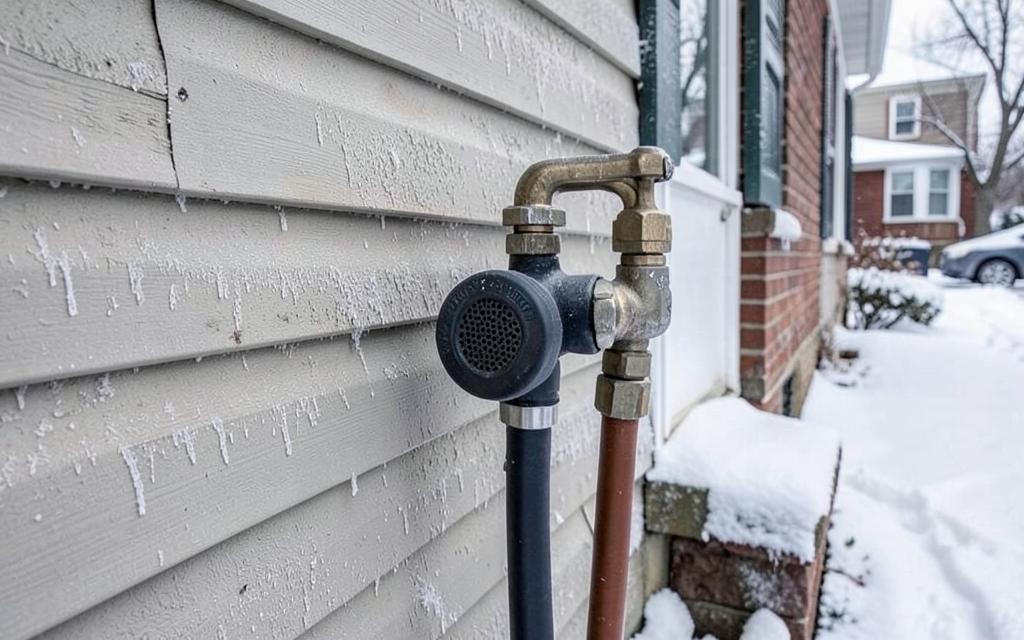
- Disconnect every garden hose — a connected hose traps water in the bib and is the single most common cause of a split
- Shut the interior stop for each hose bib if you have one, then open the outside spigot to drain it
- Add insulated faucet covers on bibs that are not frost-free
- Check that the sump pump discharge terminates well away from the foundation and does not sit in a low spot that can ice over
- Clear leaves from window wells and grade so meltwater runs away from the house
- Shut off and drain irrigation systems according to the manufacturer's procedure
More on how that failure shortens pump life is in our guide to sump pump life expectancy.
Prevention: inside the house
A steady thermostat matters more than most people expect. Deep overnight setbacks save a little on gas and cost far more when a kitchen line on an exterior north wall gives out.
- Insulate pipes in crawl spaces, unheated garages, attics and along exterior walls
- Close crawl space vents and seal obvious drafts near pipe runs
- Find and label your main shutoff, and make sure the valve actually turns
- Open vanity and sink cabinets on exterior walls during a deep freeze so room heat reaches the pipes
- Keep the thermostat at a steady temperature rather than deep setbacks overnight in extreme cold
- Check the water heater for corrosion at fittings and confirm the relief valve discharge pipe is intact
Prevention: heating equipment that protects the plumbing
A plumbing winterization plan should include the heating equipment that protects vulnerable pipe runs. A furnace, boiler or thermostat problem can allow exterior-wall, crawl-space and utility-room temperatures to fall far enough for piping to freeze. A fall heating check can identify ignition, combustion, circulation, airflow and control problems before sustained cold weather.
Your pipes depend on the heat staying on. If the furnace or boiler cannot keep the building warm, plumbing in cold parts of the house can freeze even if the pipes themselves were fine before. Testing the heating system now gives you time to repair a problem before a freeze.
Furnace, boiler and thermostat work is on our heating services page, and the repair-or-replace thresholds we use are in
Prevention: if the house will be empty
Vacant, seasonal or renovation properties, and buildings where heat will be off, usually need professional winterization rather than a homeowner checklist, because water can stay trapped in low spots, appliances and branch lines after the main is closed.
- Never set the heat below the mid 50s, even for a long absence
- Shut the main water valve and open a low fixture to relieve pressure in the lines
- Ask someone to check the house during extended cold, especially after a power outage
- Consider a freeze alarm or a low-temperature alert if you travel every winter
- Confirm the sump pump works and that any battery backup has a battery under five years old
Our guide on when to shut off water before a Chicago freeze explains that decision in more detail.
Not Prevention: What to Do if a Pipe Has Already Frozen
A pipe that froze once will freeze again in the same spot. Once things are dry, it is worth fixing the reason — insulation, a draft, or a run that never should have been in that wall.
- Shut the main water off before thawing anything, so a split does not become a flood
- Open the affected faucet so melting water has somewhere to go
- Warm the area with a hair dryer or space heater — never an open flame
- Watch the pipe as it thaws and call if you see a bulge, a split or water appearing
If a frozen pipe has already split and water is running, our emergency plumber Des Plaines page covers what we respond to and how to reach us right away.
For what happens on the visit itself, see our frozen-pipe repair page.
Frequently asked questions
Do I really need to disconnect the hose if I have frost-free bibs?
Yes. A frost-free bib only drains if nothing is attached. A connected hose holds water in the barrel and defeats the design.
Should I leave a faucet dripping in extreme cold?
A slow drip on a fixture served by a vulnerable run can help during a severe cold snap. It is a stopgap, not a fix — the long-term answer is insulation and air sealing.
How low can I set the thermostat while away?
Keep it in the mid to upper 50s. Lower saves very little and leaves no margin if the weather turns or the furnace has trouble.
Is winterizing something you do as a service?
We handle the plumbing and heating parts of it — insulating vulnerable runs, checking shutoffs, servicing water heaters, sump pumps and heating equipment. Call 847-550-3322 in the suburbs or 773-250-6060 in Chicago.
Talk to Right Away
Most of this list is an afternoon of work in October. The alternative is a January call with the water off and a wet ceiling, which is a much longer day for everyone.
See our plumbing services, heating services, the communities we serve, or browse every guide on our blog. You can also request service online.
Call 773-250-6060