
Sump Backup Alarms Before Rain: Basement Checklist
· 6 min read · Right Away Plumbing & HVAC
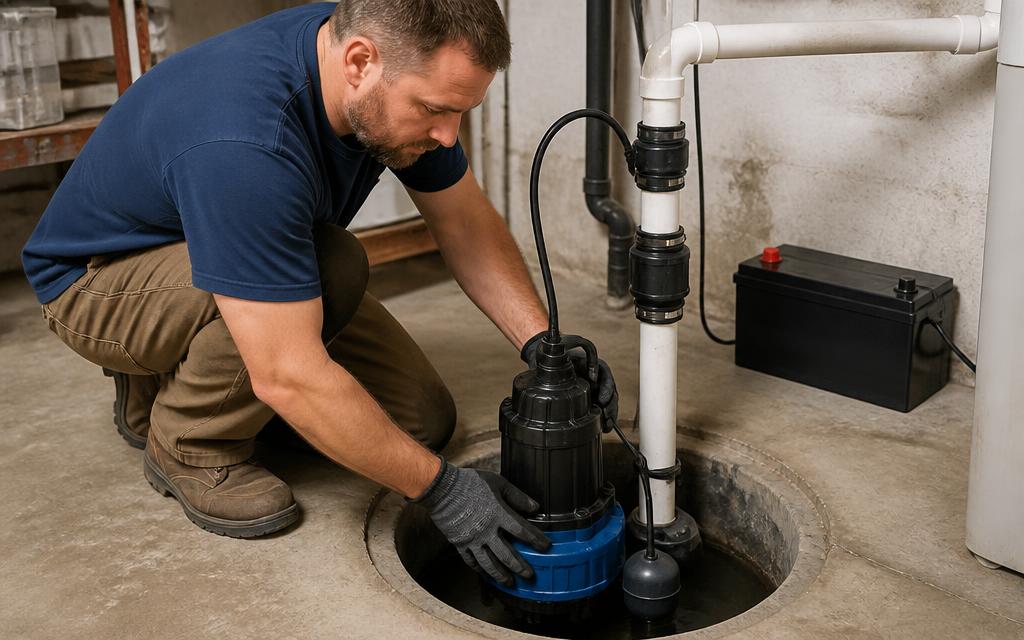
A sump pump motor running is not the same as a basement protection system working. Water must enter the basin, trigger the pump and reach an appropriate discharge outlet. The backup must be able to operate when needed, and its battery must be in suitable condition. A check while the area is dry is much more useful than discovering one of those steps failed during a storm.
Heavy rain and winter thaw can expose a weak discharge route, a jammed float or a backup that was installed but never tested. Preparation should follow the whole water path. It should also distinguish groundwater entering around the foundation from sanitary sewage coming through a building drain. One pump upgrade cannot be assumed to fix both problems.
Safety before inspecting the basement
Do not enter floodwater if electrical equipment, outlets or cords may be affected. A working light or a stopped pump does not establish that the area is safe. Have electrical hazards handled by qualified responders or trades before anyone tries to reach equipment. Right Away does not perform electrical work; plumbing inspection does not replace safe electrical isolation.
Treat sewage and unknown floodwater as contaminated. Keep children and pets away and arrange appropriate cleanup. A visible puddle may have reached building materials beyond its edge. If a strong odor or backup is present, avoid contact rather than testing fixtures to see whether more water comes up. Diagnose the source after immediate hazards are controlled.
Check the primary pump using its instructions
When the basin and surrounding area are safely accessible, use the manufacturer's testing procedure. The aim is to observe normal activation, water removal and shutdown without improvising around live equipment. Record a float that catches, a motor that hums without moving water or a pump that runs continuously. Those are symptoms to investigate, not reasons to keep forcing the switch.
A brief successful test is useful but has limits. It does not recreate every storm's incoming water volume or prove the system can handle a prolonged event. The pump, basin, lift and discharge route need to suit the property. If flooding has occurred before, review what happened instead of assuming a replacement with the same rating will correct the original weakness.
Look at the discharge route
A discharge line can be blocked, frozen, damaged or arranged so that water returns toward the foundation. Inspect accessible exterior sections from a safe location. Note where water goes, whether the outlet is clear and whether the route has been changed by landscaping or construction. Do not redirect flow onto neighboring property or connect piping to an unapproved drain.
Winter conditions add another concern: a line that holds water or terminates poorly may freeze. A seasonal extension or buried route needs a suitable design for the installation and local requirements. A larger pump working against a blocked line is not an effective solution. Ask about the actual route and required lift before discussing capacity changes.
Understand the backup's role
A battery backup can provide limited pumping when the primary system loses power or encounters a problem, depending on the system design. Its usefulness depends on battery condition, pump capacity and incoming water. No universal number of hours applies to every installation. A battery that appears charged may still have reduced performance under a real pumping load.
Follow the backup manufacturer's test and maintenance instructions. Check the visible status indicators and document alarms. Batteries are not all maintained alike; do not open a sealed battery or improvise charging and fluid procedures. An unresolved alarm deserves attention before the next storm. Ask which condition it reports rather than silencing it and treating the system as ready.
Know what alarms are telling you
A high-water alarm, low-battery warning and backup-operation alert report different conditions. Keep the system instructions available so household members know the meaning of each signal. If remote notifications are installed, confirm they reach the intended person. A phone alert depends on its connection and power arrangements and is not a substitute for an operating pump.
If the backup activates while the primary pump seems to be running, the system may need closer review. Incoming water could exceed current capacity, a discharge problem may interfere with pumping, or the primary system may not be working as expected. Observe only from a safe location and report the sequence. Avoid changing several components before the cause has been identified.
Groundwater and sewer backups are different
Water arriving through a floor drain or toilet can involve the sanitary sewer, not just groundwater around the foundation. Repeated gurgling, slow main drainage and sewage after rain deserve a drain or sewer assessment. A sump pump normally manages water collected in its basin; it does not automatically stop sewage returning through the building drain.
Cleaning can remove an obstruction, but it cannot rebuild a collapsed pipe or correct every municipal surcharge condition. A camera inspection may help identify repeated line trouble. Backwater protection must be reviewed for the property's layout and applicable requirements. Do not install a valve or seal a drain without understanding which fixtures and flow paths the change affects.
Reduce avoidable water near the foundation
Observe gutters, downspouts and grading from safe ground-level locations. Overflowing gutters or a disconnected extension can concentrate roof water beside the building. Landscape changes can also direct runoff toward a basement window or low foundation area. These observations help identify a possible contributor but do not establish that one exterior change will solve all basement moisture.
Do not climb unsafe ladders or open buried piping as part of a casual seasonal check. Describe where water collects and when the sump runs. A basement that becomes wet only during long rain may behave differently from one with a constant inflow. Plumbing, drainage and building-envelope concerns may require different work and coordinated assessment.
Keep a record before choosing repairs
Write down pump and backup model information when it is safely visible, past service dates and any alarm history. Note whether a previous flood involved a power outage, sewer backup or a pump running without lowering the water level. That history is more helpful than describing every event simply as a sump failure.
Before approving work, ask which problem the recommendation addresses and what limitations remain. A new battery does not repair a damaged sewer. A new pump does not remove a frozen discharge restriction. Planned care can reduce avoidable surprises and may be less disruptive than emergency cleanup, but no pump, valve or maintenance visit guarantees a dry basement.
Related services and guides
See also: Sump pump and battery backup service.
See also: Sewer repair.
See also: Sewer backups after rain.
See also: Whole-home seasonal checklist.
Local service: Des Plaines sump and plumbing service.
Frequently asked questions
How long will the battery backup run?
That depends on battery condition, capacity and how frequently pumping is needed. Use the system's guidance and actual operating conditions. Do not rely on an advertised runtime as a promise for every storm or for an aging battery.
Is noise at shutdown proof of a failed valve?
No. Noise is a useful symptom, but several arrangements can make sounds during operation. Have the system reviewed if the noise changes, the pump cycles repeatedly or water returns abnormally. Diagnose before replacing components solely to quiet a sound.
Should I replace a pump based only on age?
Consider condition, performance, use and service history along with age. There is no single lifespan that applies to every installation. A professional assessment can distinguish routine maintenance from a pump or system change that is justified.
Can I test equipment while the basement is wet?
Do not approach equipment where water may create an electrical or contamination hazard. Resolve safety first through qualified help. Seasonal testing belongs in a safely accessible setting, not an improvised response from within floodwater.
Talk to Right Away
Call 847-550-3322 to discuss the equipment, symptoms and maintenance needed at your property.
You can read more about our plumbing services, check the communities we serve, or start with plumbing in Des Plaines and Park Ridge. Planning a remodel or weighing a big replacement? Our consulting service is built for that conversation.
Service areas for this work include Chicago and Des Plaines and Mount Prospect. Questions about your building? Use our contact page.