
Is Your Sump Pump Ready for the Next Chicago Storm?
· 7 min read · Right Away Plumbing and HVAC
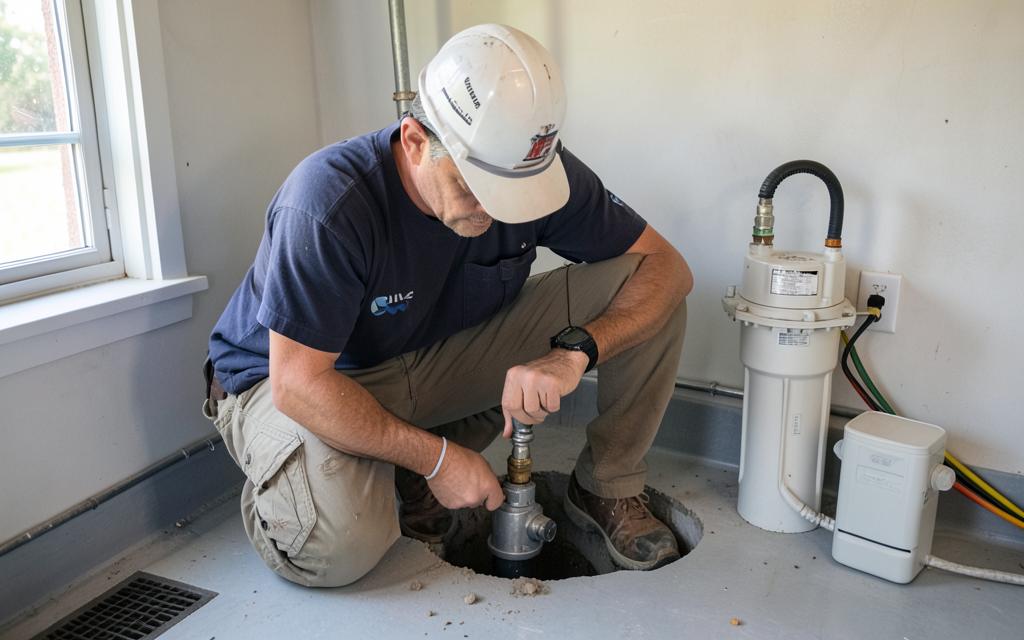
A sump pump is the one piece of equipment in most Chicago-area homes that only matters when the weather turns — and by then it is too late to find out it has failed. Spring downpours, summer storms and late-winter snowmelt all send water toward the same place: the low point of your foundation.
At Right Away Plumbing and HVAC, we install, repair, replace and maintain sump pumps and backup systems for homeowners throughout Des Plaines and the surrounding northwest suburbs. Here is what to watch for and how we can help.
Why sump pumps matter so much here
Much of Chicagoland sits on heavy clay soil that drains slowly. When a storm drops an inch or two of rain in a short window, that water does not soak away — it sits against the foundation and works its way toward the drain tile and the sump pit. Homes near the Des Plaines River and other low-lying areas deal with a high water table on top of that, which means the pump may run in dry weather too.
Snowmelt is the other half of the story. A February thaw over frozen ground behaves much like a summer downpour: the water has nowhere to go but down along the foundation wall. That is why a pump that coasted through one season can still be overwhelmed the next.
Sump pump work is part of our broader plumbing service across Des Plaines and the northwest suburbs.
Signs your sump pump is failing or undersized
Any one of these can have more than one cause. Short-cycling often traces back to a float switch or a pit that is too small; constant running can mean a high water table, a stuck check valve, or a pump that is simply undersized for the volume it is being asked to move. That is why we diagnose the system rather than swapping in a new pump and hoping.
Most residential sump pumps last about 7 to 10 years. A pump in a high-water-table basement that cycles heavily may wear out sooner. If you do not know how old yours is, that alone is a reason to have it tested.
- Short-cycling — turning on and off rapidly instead of running a full cycle
- Grinding, rattling or screeching noises during operation
- Running constantly, even when it has not rained
- Visible rust, sediment buildup or a float switch that sticks
- The pump is more than 7 to 10 years old, or you do not know its age
- No battery backup, so an outage leaves the basement unprotected
- Water in the pit rising while the pump runs, which can point at a blocked or frozen discharge line
For more detail on lifespan, see our guide to how long a sump pump should last.
Not sure which pit is which? Our comparison of sump pumps and ejector pumps explains the difference and why the two are not interchangeable.
Battery and water-powered backup systems
The storms that push the most water at a basement are often the same storms that take the power out. A primary pump running on house current cannot protect anything during an outage, which is why we treat a backup system as a core part of the installation rather than an upsell.
A battery backup pump uses a deep-cycle battery to keep pumping when the power is down. Runtime depends on the battery, the pump and how hard the pit is working, so we size the system to the home instead of quoting a fixed number of hours. Batteries themselves wear out and should be tested and replaced on a schedule.
A water-powered backup uses municipal water pressure rather than a battery, so there is nothing to recharge or replace. It requires an adequate municipal supply and correct backflow protection, and it is not an option on a well, so it suits some homes and not others. We will tell you which fits your setup.
Sump pump services we offer
A proper installation is more than dropping a pump in the pit. We check the discharge routing, the check valve, the pit size and the float clearance, and confirm the line carries water far enough from the foundation that it does not simply return to the drain tile.
When a repair is still the right answer, we do the repair. When a pump is at the end of its life or undersized for the basement, we quote both paths and let you compare.
- Sump pump installation and replacement, sized to the pit and the load
- Sump pump repair — float switches, check valves, discharge lines, noise and cycling faults
- Battery backup and water-powered backup system installation
- Battery testing and replacement on existing backup systems
- Annual testing and maintenance, including pit cleaning and discharge inspection
- Discharge line repairs and freeze-prone line corrections
See our full plumbing repair and installation services, or read our detailed walkthrough of
sump pump installation, repair and maintenance.
Wondering what a replacement runs? Our sump pump replacement cost guide walks through what drives the price.
What it costs to skip maintenance
We are not going to put a dollar figure on a flooded basement, because the range is enormous and depends entirely on the home, the finishes and how long the water sat. What we can say is that the work is rarely limited to removing the water.
Standing water in a finished basement typically means carpet, pad, drywall and baseboard come out, along with anything stored on the floor. Moisture left in wall cavities can support mold growth, which brings a remediation step on top of the reconstruction. Repeated saturation against a foundation can also contribute to settlement and water-intrusion problems over time.
None of that is meant as a scare tactic — plenty of basements go decades without an incident. The point is simply that an annual test and a working backup are small, predictable steps compared with the alternative, and the test takes a technician very little time.
If storm water is also coming up through floor drains, read about sewer backups after heavy rain, which is a different problem with a different fix.
Buying a home with an unknown pump? A plumbing and HVAC property inspection documents its condition before you commit.
Serving the northwest Chicago suburbs
Right Away Plumbing and HVAC is based in Des Plaines and serves homeowners throughout the northwest suburbs, including Park Ridge, Mount Prospect, Arlington Heights, Palatine, Schaumburg, Rolling Meadows, Glenview, Buffalo Grove and the surrounding Cook and DuPage communities.
Our technicians show up on time, explain what the pump is actually doing in plain language, and give you the options rather than a single number. For Chicago addresses, call 773-250-6060.
See every community we cover on our service areas page, including our hometown of
Schedule a sump pump check today
The best time to find out a sump pump has failed is on a dry afternoon with a technician standing next to it — not at 2 a.m. during a storm. Call Right Away Plumbing and HVAC at (847) 550-3322 to schedule a sump pump test, repair, replacement or backup system installation.
We are located at 2093 Rand Rd, Des Plaines, IL 60016, and we serve homeowners across the northwest Chicago suburbs.
You can also send us your details through our contact page, or use the request-service form on the homepage.
Frequently asked questions
How long does a sump pump last?
Most residential sump pumps last about 7 to 10 years. A pump in a high-water-table basement that cycles heavily can wear out sooner, while a lightly loaded pump in a dry pit may run a little longer. If you do not know the age of yours, have it tested rather than assuming.
How often should a sump pump be tested?
At least once a year, and ideally twice — early spring before the wet season and early fall before the heaviest rains — plus after any major storm. Testing includes running the pump, checking the float, inspecting the check valve and confirming the discharge line is clear.
Why does my sump pump run when it has not rained?
Usually a high water table, groundwater seeping through drain tile, or a stuck check valve letting discharged water fall back into the pit. It can also indicate a float switch that is not resetting properly. Constant running shortens pump life, so it is worth diagnosing.
Do I need a battery backup sump pump?
In most Chicago-area basements it is the single most worthwhile addition. The storms most likely to flood a basement are also the ones most likely to knock out power, and a primary pump on house current cannot run during an outage. Runtime depends on the battery, the pump and how hard the pit is working.
What is a water-powered backup sump pump?
It uses municipal water pressure instead of a battery, so there is no battery to recharge or replace. It needs an adequate municipal supply and proper backflow protection, and it is not an option for homes on a private well. We will tell you whether your home is a candidate.
Should I repair or replace my sump pump?
It depends on the age, the fault and the condition of the pit. A float switch or check valve on a newer pump is usually a straightforward repair. A pump at or past the 7 to 10 year mark that is short-cycling, noisy or rusting is typically better replaced before it fails. We quote both so you can compare.
Talk to Right Away
Whether your sump pump needs an annual test, a specific repair, a full replacement or a backup system, Right Away Plumbing and HVAC can help. We install, repair and maintain sump pumps for homeowners across Des Plaines and the northwest Chicago suburbs.
Call (847) 550-3322 to schedule a sump pump inspection, repair or installation. For Chicago addresses, call 773-250-6060. We are based at 2093 Rand Rd, Des Plaines, IL 60016, and we are licensed, bonded and insured.
You can read more about our plumbing services, check the communities we serve, or start with plumbing in Des Plaines and Park Ridge. Planning a remodel or weighing a big replacement? Our consulting service is built for that conversation.